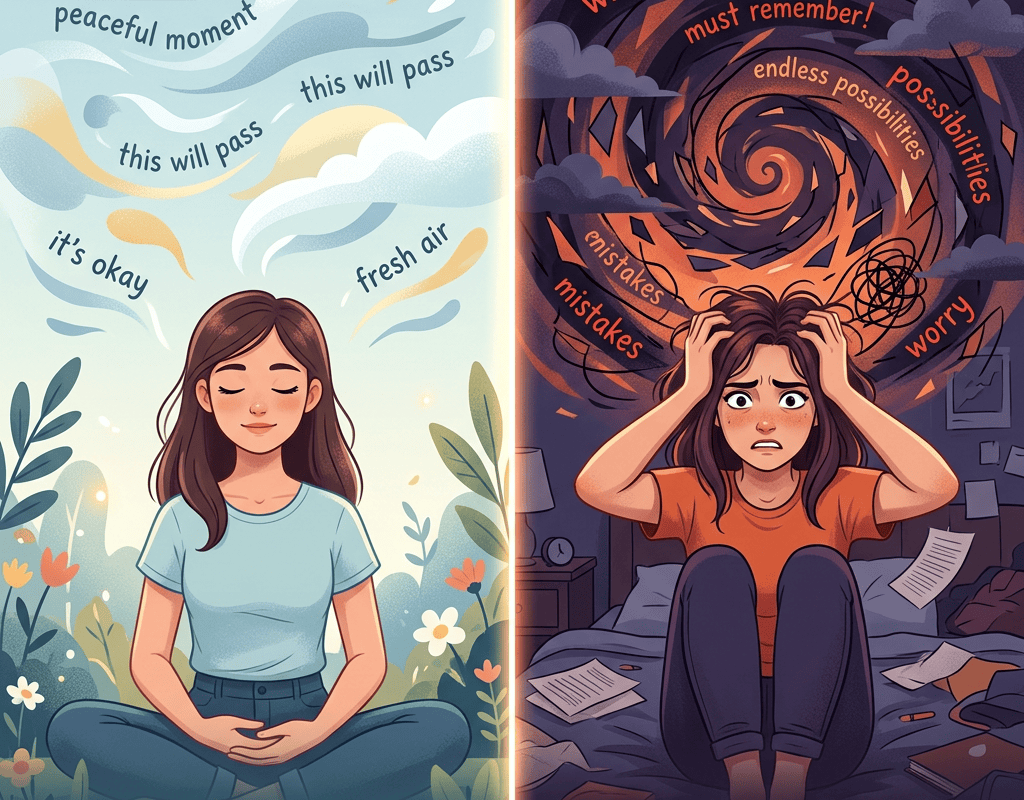
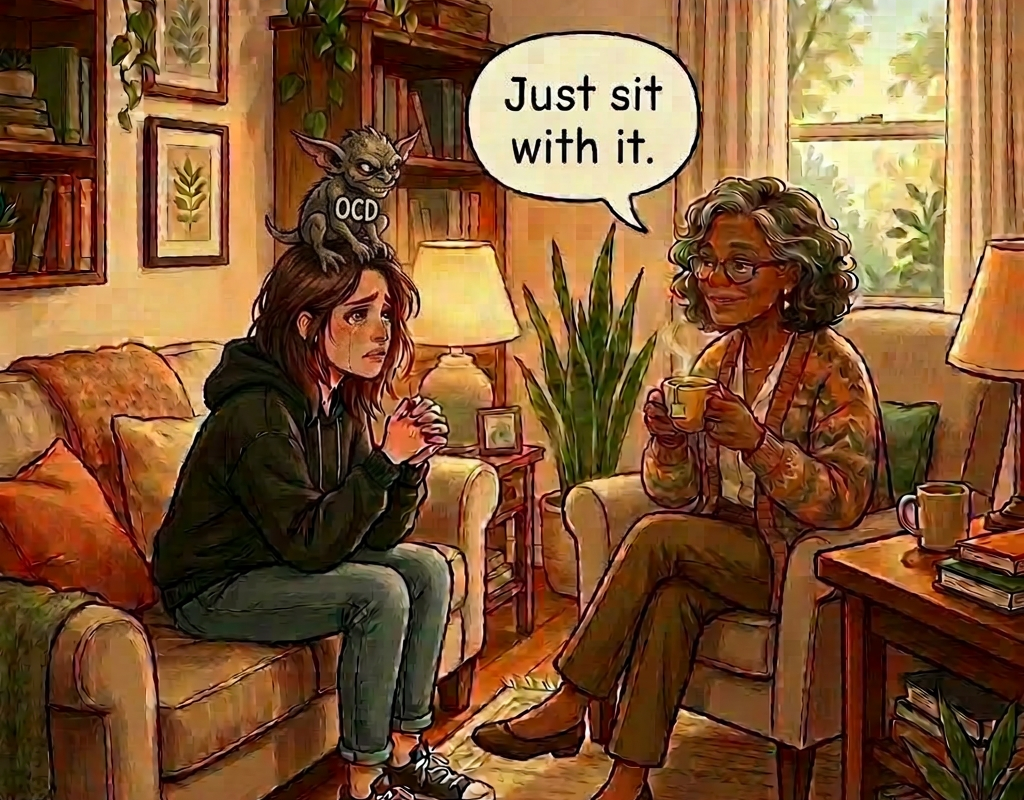
OCD: The Subtypes are Irrelevant

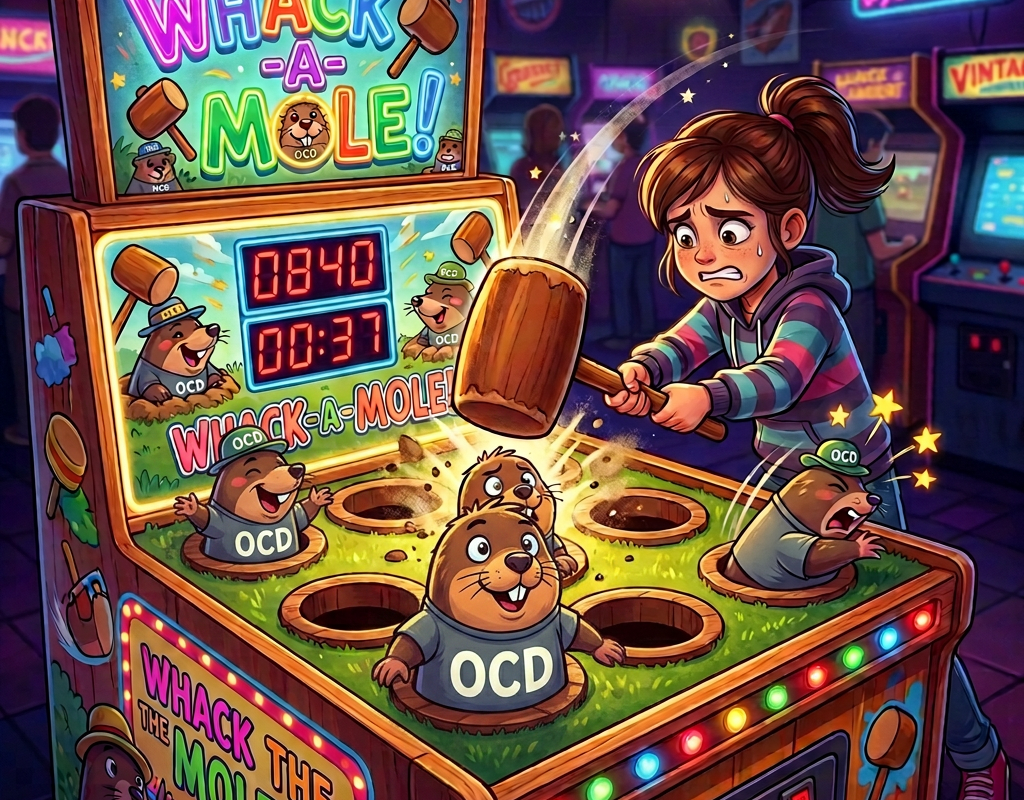
Girl playing a colorful whack-a-mole arcade game

‘The subtypes are irrelevant’. When I first heard this statement about OCD I believe I rejected it, but once you start to zoom out a bit and observe OCDs wicked game, especially when you’ve had OCD for a while and have lots of evidence to look at, you can see that the subtypes are just a cover for what’s really happening underneath, which is your inability to sit with doubt and uncertainty. 

OCD will pick a subject which you care about, where you can’t tolerate uncertainty and it’ll set up camp. It honestly doesn’t care what the theme is, it’s just looking to get you hooked and fixated on something. 

It’s my belief that this is a mechanism in the brain, very similar to anxiety, designed to slow you down and keep you trapped and therefore ‘safe’ from perceived harm.  It’s a way of making you feel like you’re in control in a world that is uncontrollable.  It’s also my belief that this is why so often OCD is triggered in times of stress and dysregulation.

I’ve had OCD since I was 11, so that’s 30 years now, and I’ve noticed through my own experience that the theme jumps about, also known as, ‘whack-a-mole’.
When I was young I worried about my family coming to harm and as grew up I worried I might harm someone myself and now as I’m older with a family I worry something might happen to me or I could do something which would harm them.  It’s always locking onto my vulnerabilities, which is ultimately how much I care about the people around me. 

When my health anxiety is heightened, the harm OCD gets quieter, and vice versa.  Also some days old themes pop back in and depending on my how regulated my nervous system is on that day, I’m either able to completely dismiss the thought OR it can take hold again, argh!!!!!!!

So if I’m aware of all of this, how come it’s still able to get me? 
I wrote a post a few weeks back which included a story called, The Elephant and the Rider, in this story it uses the metaphor of an elephant to explain how powerful the limbic system (emotional part of the brain) is.  It can take hold of you and drag you down, it will lie and do whatever it can to get your attention and keep you stuck, IF it thinks it needs to. 

This is why noticing your triggers and not letting them take hold is of the upmost importance, this is the only real control you have in OCD, as once the limbic system gets involved you are falling down the rabbit hole to fantasy land, where anything seems possible. 

When you see that trigger pop up, notice it, label it as OCD and say:

‘Thank you OCD that’s exactly what I wanted to hear right now.’

And then carry on with your day. 

Twelve words, sounds too simple right? 
But it is the ONLY way I have found that works. 

I really hope it helps,
Stay Strong xxx

Perception vs Reality in Anxiety and OCD

Hiker with backpack and trekking pole between sunny and moonlit mountain landscapes

Have you ever heard the phrase,

‘You don’t see reality as it is, you see it as you are’

This is why two people can have the exact same experience BUT have two completely different reactions to it.

It’s something worth remembering, especially when you have OCD or anxiety because the brain will be putting a filter on everything relating to your themes coming through, making them feel more intense, urgent and scary than they are. 

When my physical compulsions were really bad many years ago, one of the lies my brain told me was that I had to do everything 4 times or something bad would happen to someone in my family. 
Eventually it got so bad it was taking over my whole life, something had to be done.  At this time one of the observations I made was that no one else was doing these compulsions and they seemed OK.  Why was my brain telling me different?    

Breaking the loop

The way you break out of these loops and false realities is to become the observer of your thoughts.  This is an idea from ACT (Acceptance Commitment Therapy) called defusion. 

Defusion means stepping back from your thoughts. Instead of treating thoughts as absolute facts or commands, you learn to see them as simple words or mental events. This helps stop overthinking and reduces emotional pain but it takes practice and it can be tricky as when we are tiggered, we are quickly pulled into fight or flight.  When in this state rational thinking and the ability to make sensible judgements and defuse from thoughts becomes tricky.   

I’ve talked previously about my fears around swimming – deep routed fears that have been there since I was about 8.  I’ve been working on these more recently and I am slowly making progress, but it takes a lot of time to rewire these patterns. 
One thing I have observed for a while now is that not everyone hates swimming, in fact some people enjoy it and so the problem isn’t swimming, swimming is neither good nor bad, it’s my perception of it that’s wrong. 
My brain has decided swimming is bad, based on an experience I had when I was 8 and so that’s it for life now? Wow!

Another example from when I was younger: I used to feel lightheaded when I stood for long periods of time on hard floors and I told myself this was because I have blood pressure that’s on the low side.  In fact, that’s what I used to tell everyone. 
But having had a bought of bad anxiety since then, I now know that feeling lightheaded has nothing to do with hard floors or blood pressure and everything to do with me telling myself these things and my brain creating the conditions to make it so.  Yes, your brain can make you feel dizzy, light-headed, tired and a whole cascade of other effects which are self-created, sorry.  

Your compulsions are similar; your brain tells you to do them or else… but in reality this is a lie your brain is telling you because of a perceived reality/false belief which I’m guessing doesn’t even exist.

Can you defuse yourself from your OCD thoughs long enough to see them for what they are? 

As Always,
Stay Strong xxx   

OCD, Perfectionism & The Monkey Mind

Security guard thinking about venue safety checks and guest list

I’ve never thought of myself as a perfectionist in the past, I’m not the tidiest person or the smartest and I think I’ve always had an image in my head of a perfectionist as a highly put together, successful person.  Of course this may still be right, highly successful people may struggle with the idea of failing but my perfectionism is a little more insidious than that. 

I spend quite a lot of time in my sympathetic nervous system, more commonly known as fight or flight and one trait of this is that you think in extremes, all or nothing, black and white.  This sort of thinking allows very little room for error or mistakes, especially when combined with your OCD themes, which are of course based around the things you care about the most and can’t tolerate uncertainty or doubt around.

AS a result when you combine these two  traits you create a situation where anything expect 100% certainty – perfectionism – is acceptable.

Perfect is impossible

When we’re triggered – for whatever reason – we fall into fight or flight, losing our ability to see nuance.  This takes away our permission to be human because we know being perfect is impossible for anyone, we then beat ourselves up and try to ‘fix’ the perceived issue. 

We can think of this way of thinking as our monkey mind, the more primitive part of our brain which keeps us alive and safe, in fact this is ALL it cares about. Staying alive. 
In the past this would of included not being kicked out of our tribe, so not making mistakes which may cause this would have been important.  ‘What would others think of me if they could see my thoughts and know I wasn’t perfect?’.  Sound familiar?

Why does the monkey mind overestimate threats?

The monkey mind has issues with calculating threats correctly. Estimating odds and making risk assessments are done elsewhere in the brain and so it can only guess.  Why wouldn’t it err on the side of safety?  Why would it take the risk?  The monkey mind CANNOT be reasoned with, comforted or distracted from its mission. The only way we can override it is with our behaviours.

The monkey mind doesn’t realise there is more to life than just surviving,

‘…reasoning with the monkey mind is impossible, its too primitive to see the big picture that you can see with the rest of your brain.  The monkey has a narrow little view of the world, it’s perception of what’s threat and what isn’t can only be altered by one thing. It learns by watching you do.  if you want to stop being ruled by your monkey you are the one who will have to change’ – passage taken from ‘Don’t feed the monkey mind’ by Jennifer Shannon

The above paragraph highlights beautifully how narrow a view this part of the brain has and why it is so important to let the thoughts be and carry on. 

We need to see it as the more animalist side of our brains, I think as humans we don’t like this less civilised part of us but it is largely responsible for our survival so we shouldn’t wish for it not to be there, in fact people with little to no anxious tendencies tend not to live as long – however they may not care about this!   

When regulated and not in fight or flight I can observe my monkey mind throwing pretty much constant live or die scenarios at me and it can be tiring to let them flow over me and not engage.  Most people have a ‘bouncer’ on the door to their conscious mind saying, ‘no you can’t come in’ or ‘not today mate you’re too drunk, go home’, when these thoughts come in however when we have OCD there is a fault here like the ‘bouncer’ has gone on his break, as a result more of these catastrophic thoughts tend to get through.

We have to act as our own bouncer, carrying on with our day, allowing the thoughts to pop up and pass through as best we can, I know it’s hard but it’s the only way.

Just writing this today has been a helpful reminder for me, I really hope it helps you too.

As Always,
Stay Strong xxx

OCD, Perspective & An Elephant

Blindfolded men touching different parts of an elephant's body in a dusty courtyard.

Perspective can be defined as: ‘a point of view’ or ‘way of thinking about things’ and I would argue when you have OCD your perspective is somewhat skewed towards the negative, worst case scenario and quite often completely illogical.

This is mostly due to the fact that we’re not thinking with our cognitive brains. When triggered by OCD obsessions, our more animalistic brain takes over and this one likes to think in black and white – no time for nuance when the obsession is being categorised as a life or death situation!

I heard a lovely story, which I believe originated in India, which highlights the flaws in perspective nicely:

Six blind men were asked to determine what an elephant looked like by feeling different parts of the elephants body. The blind man who feels a leg says the elephant is like a pillar, the one who feels the tail says the elephant is like a rope, the one who feels the trunk says the elephant is like a tree branch; the one who feels the ear say the elephant is like a hand fan; the one who feels the belly says the elephant is like a wall; and the one who feels the tusk says the elephant is like a solid pipe. -Taken from Brightening our inner skies Yin and Yoga by Norman Blair

We can learn from this story that quite often in life we are not seeing the whole picture. Our anxious brains have got us to focus in on the worst case scenario, often catastrophizing events to laughable levels, this causes us endless unnecessary suffering.

Do you find you catastrophise events and lose perspective?
Remember you are not alone, this is incredibly common but by having some knowledge we can remind ourselves that quite often there is another more favourable way to look at things.

If you most catastrophise then why not DO IT POSITIVELY!

As always,
Stay Strong xxx

Breaking the Cycle: Awareness in OCD Recovery

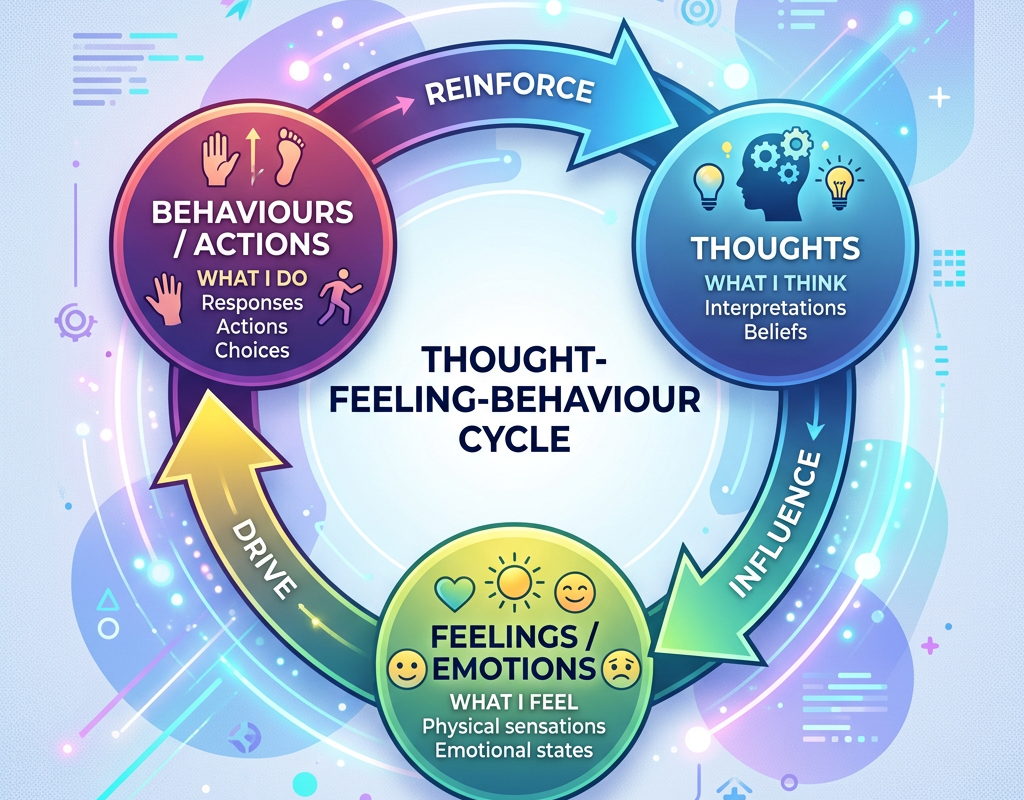
Diagram of thought-feeling-behaviour cycle with three connected circles labeled Thoughts, Feelings/Emotions, and Behaviours/Actions

We learn in CBT (cognitive behavioural therapy) that thoughts, feeling and behaviours are all linked and influence each other. 

We also learn that we have very little control over our thoughts and that we all definitely get thoughts which come in unbidden and randomly.

It always blows my mind that they don’t teach these lessons at school. How much suffering could be prevented if people we’re given even a small insight into the nature of thoughts.

As an example, if we’re not careful,

Automatic thoughts – potentially intrusive OCD ones – can come in and produce feelings – probably of unease, disgust, aversion or fear – which then influence our behaviours – driving things like avoidance, compulsions and irritability to name just a few. All from thoughts WE CANNOT CONTROL!!!!!

As we grow older we become more automated as people, the brain is clever and as it leans things it automates them for us. Things such as brushing our teeth, tying our shoes laces and even driving – which once required huge effort – over time require little to no mental challenge for us. 

Maybe less obvious then are the mental habits we form as we grow. The same thoughts tick round our heads daily, efficiently taking us about our normal routines. This is very appealing to the brain, who’s top priority is to keep you safe, which is does by predicting what you’re going to do next and so it has no huge incentive to change these automatic patterns.

When we suffer from OCD or anxiety these habitual thoughts may not be overly helpful, in fact they can be incredibly distressing but the brain doesn’t particularly care as it’s top priority is to keep you safe and it will happily pick a predictable hell over an unpredictable heaven. 

You see this again and again in life, people making the same mistakes even though they can see they’re not helpful.

In OCD we see this pattern too.  We know the thoughts are distressing and unhelpful, but all the brain sees is that you are safe and well if the OCD thoughts continue to come in and so it continues to throw them your way.  Why take the risk afterall that they’re not real, better to have you safe at home in your own head then thriving and living your best life. 

Awareness is the key. We have to be awake to our automated habits, becoming an observer so that we are able to see the ones that are useful – brushing your teeth – and the ones that aren’t – OCD loops. 

Ever had the experience where you wake up in the morning and for a second you feel calm and peaceful before all the OCD thoughts come rushing in and you feel yourself sinking into a spiral again?  Well that’s your automatic brain habits switching on, even just noticing this effect can be revolutionary and it really is the first step to changing them. 

I mentioned yoga a couple of posts ago and how it can be helpful for OCD recovery, yoga is all about action and reflection at it’s core.  We move, we observe and we change if necessary.  Modern life is chaotic and it’s only becoming more so as our attention is constantly being pulled here and there. Yoga gives you a space to breath, stop, slow down and observe, allowing you to make changes where needed and empowering you to take back control from those unhelpful automatic patterns.

Mindfulness is also an incredibly powerful tool here, how present are you in your life? How much of your time is spent thinking about the past, predicting the future or looping through OCD sprials? So little time is spent in the present moment and yet it’s all we have.

OCD and anxiety cannot live in the present, the more we train our minds to come back to the present moment, the happier we will all be.      

Do you have an mindfulness practice? It doesn’t have to be complicated, maybe just try slowing down and noticing what’s around you more throughout your day.

As Always,
Stay Strong xxx

OCD & Anxiety – An Illusion of Control

Mage using magical powers to summon a swirling storm vortex on a cliff beside a turbulent sea

As humans we have the gift to be able to think about and analyse our thoughts, feelings and general experiences in life. 

This is a gift, which has enabled us to become the most dominant species on earth, even though we’re not the fasted or fiercest in the animal kingdom.

However, the world likes to be in balance and so we should expect that with such a great gift comes the potential for great pain and suffering.

Our ability as humans to plan, create, and rerun scenarios in our heads, can also be used for our own self-destruction if we’re not careful.

With this awareness comes the knowledge that we aren’t as in control of the world as we would like to be and this creates great discomfort for us. 

Our brains are designed to work out and fix problems to enable us to survive, it doesn’t care if we’re thriving and living your best lives it just wants us safe. Unfortunately the brain, as smart as it is, isn’t great at telling the difference between an imagined reality and our real one, here we can see how we can create suffering for ourselves, enter anxiety and OCD.

Quite often, in my experience, the onset of anxiety and OCD coincides with times of stress where we feel out of control or unsafe, throwing us into our sympathetic nervous system (fight or flight).

At these times the brain creates anxiety to stop us in our tracts, forcing us to pull back and OCD to keep us stuck inside our own heads. 

Both scenarios work to immobilise us, stop us living our lives, slowing us down and to be honest they’re generally pretty successful at it. 

They use our human gifts of imagination, memory (past experiences) and prediction (perceived future experiences) against us, creating at times unbearable feelings, doubts, fears and uncertainty. 

Having suffered from both OCD and anxiety in my time I know just how strong they can be.

I hear a lot of therapists saying, ‘feel the fear and do it anyway’ and even though this is great advice I also know, from lived experience, that if you push too hard when you’re anxious and don’t respect your need to rest as well, your nervous system will get louder, not quieter. 

There is a balance we must find between, sitting with it and respecting it, which can be incredibly tricky to do. 

This week I saw a return of my BPPV – a type of vertigo – in the past this has caused me huge anxiety and panic and so it’s been a tricky week, my brain has felt scared and I’ve had to pull back to respect that. 

My anxiety has made me feel tired, fatigued, off balance and like I’d like to do nothing more then stay at home and do nothing. 

As a result I’ve removed some of the extra activities I’d normally do when feeling my best, like my strength training, to allow my brain and body time to rest and see that it is safe to relax again. 

I’ve still taught my yoga classes but had to cue rather than partake, all while sitting with the uncomfortable anxious feelings my brain is sending my way.  This is the balance I am talking about, it is a tricky one and a life long skill which we need to master. 

Life is chaotic and unpredictable and as humans we hate this but the more we push against it the more we suffer.  OCD is an ultimate version of this, trying to eliminate all doubt is impossible, there will always be another, ‘What if?’ or ‘Maybe?’ and in the end you need to trust that when a situation arises you will make the right decision and be capable of handling it.

You got this, as always,
Stay Strong xxx 

OCD: Stop trying to Control your Obsessions!

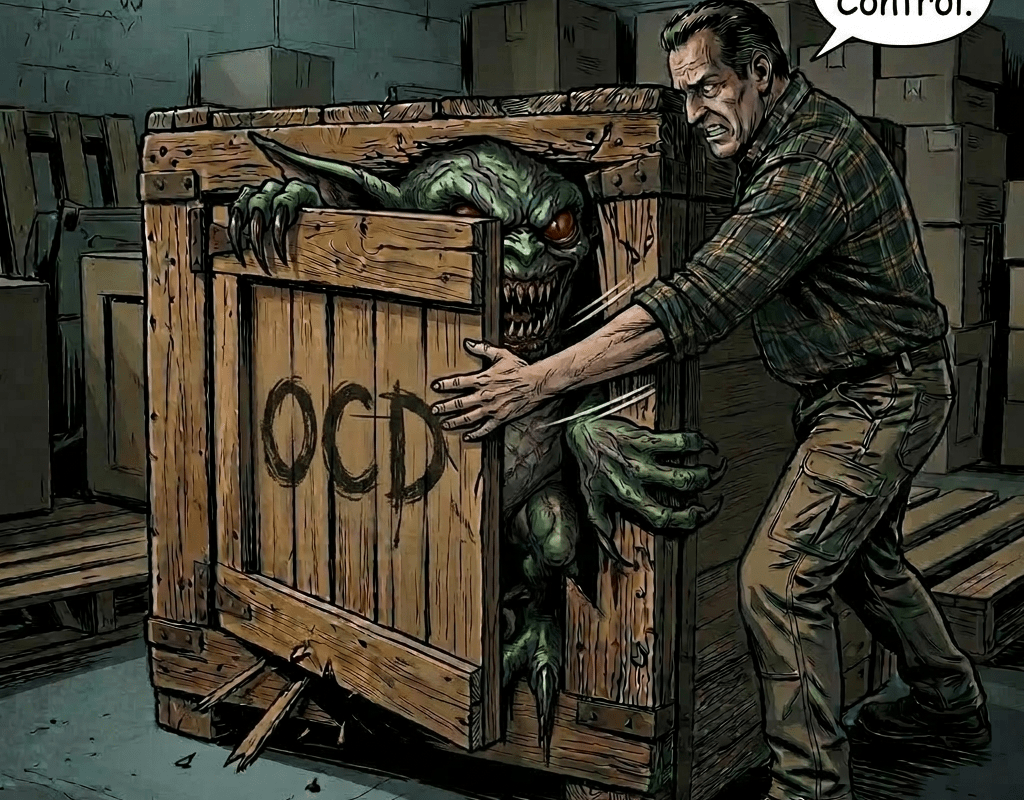
Gremlin peeking out from a partially open wooden crate labeled 'Property of Gremlin's Cave - Do Not Open'

Are you trying to control your obsessions? Are they based around things you have no control over? Is this then a completely fruitless task?

Some interesting questions but lets take a step back for a second and clarify a couple of things. What is an OCD obsession anyway?

An OCD obsession is:
‘… a recurring, unwanted thought, image, urge, or impulse that repeatedly enters a person’s mind and causes significant anxiety, distress, or discomfort.’

Things we can’t control include: feelings, emotions, thoughts, images & urges. 

Take a moment now and recognise whether your OCD has come from something you have NO control over!

Hopefully that was a lightbulb moment.    

Woman having a bright idea with a light bulb above her head while studying at a desk

So much of OCD is focused in on the things we can’t control.  It can feel so powerful, and overwhelming at times, as if it deserves our time and attention but as a human we need to learn that we’re not fully in control of our internal environment and to allow these automatic ‘features’ of the human condition to just be.

We don’t have to believe every thought, feeling etc that comes into our head. Most of the time the brain is just throwing things out there to see if they stick and we have to be like Teflon, letting the thoughts just float through, showing the brain that they are irrelevant. Only then will it go off to find something else to throw your way instead, which you then need to allow to float through, so the brain sees that as irrelevant too. Get the idea?

It’s when we give these normal, automatic thoughts time and energy that the brain perks up and thinks they’re important.  It takes it as a sign that you want to see more of that content and so we can see how spirals start to happen. 

On days when I don’t let the thoughts stick it is unbelievable how many different thoughts come my way, the brain is throwing them out there constantly and it’s your job to just do nothing, in the same way it’s the brains job to keep throwing random thoughts and ideas your way. Occasionally it comes up with good ones too remember, they’re not all intrusive and unwanted.  

Why do we give away our power, focus and attention to things outside of our control?

Basically because the limbic system – emotional part of the brain – is more powerful than the cognitive one.  Yes, our thinking brain is not actually the one in control most of the time. As a result we have to learn to work with our emotional brain, not against it – as this is pretty much impossible. 

There’s a famous metaphor called: ‘The Rider and the Elephant’, which helps to describe this idea. 

The rider represents our thinking brain, good at analytics and planning, but small relative to the enormous elephant.  The elephant, represents our emotional brain, it’s vast, powerful, and often driven by instinct.  The rider has the reins but needs to work with the elephant in harmony, as when the elephant gets stirred it has the ability to dislodge the rider if it wishes. 

Person riding an elephant on a dirt path at sunrise with misty landscape

And so we have to work with, not against our emotional brain.  It is powerful and has the ability to hijack our rational thinking. 

We work with it by accepting the obsessions when they come in.  It’s worth noting here that accepting the obsessions doesn’t mean you like, agree with or want them in any way, it just shows the brain that they are irrelevant to you and so it doesn’t need to give them any of your time, attention or awareness.

It can feel impossible at times I know but the more we push back/away the stronger they become.  Like a tug of war, we have to let go of the rope not pull harder.  

My favourite phrase to use is:

‘Thank you brain, that’s exactly what I wanted to hear right now.’ 

This way you are acknowledging the obsession but not pushing it away or investing any time in it.

‘But how do I know if it’s OCD or something that does need paying attemtion to?’ I hear you ask.

Ask yourself the following questions: ‘Am I struggling?’ 

If the answer is ‘Yes!’, then its your OCD and you need to step away from the content. 

I think it’s so important to remind ourselves of these basics, as at times, especially when triggered, it can feel hard to remember that you didn’t ask for the obsession and as a result it doesn’t mean anything!

I really hope this helps, as always,
Stay Strong xxx
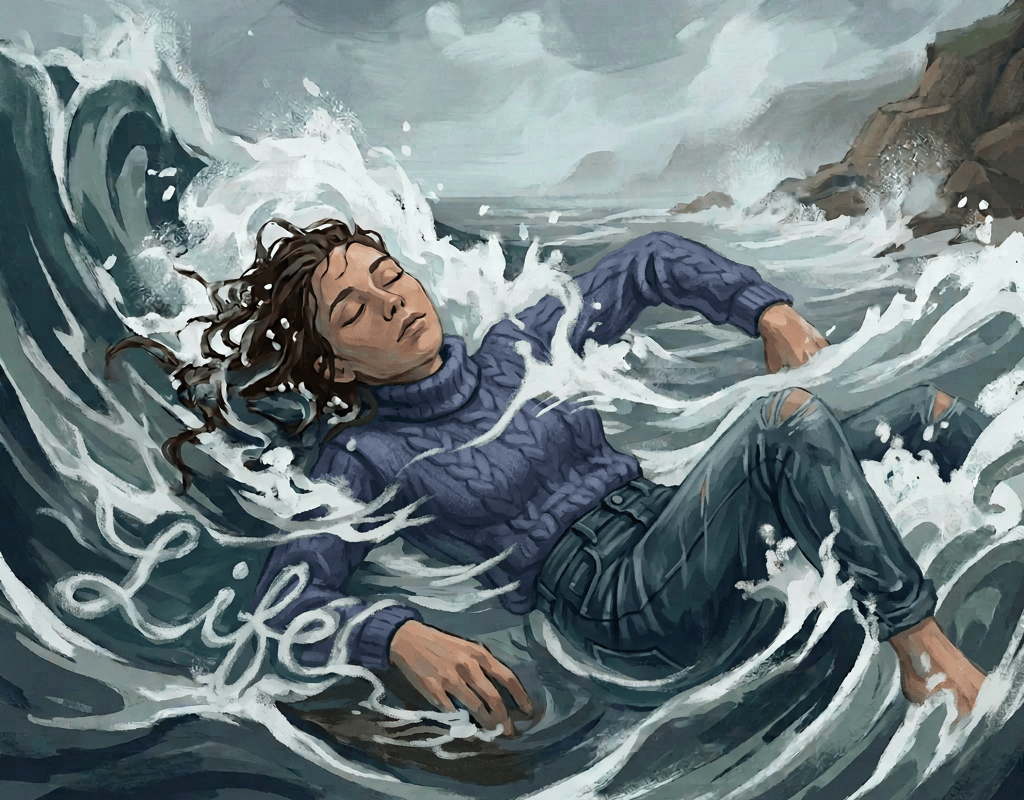
My issue with ERP Therapists

Young woman talking to therapist in cozy, warmly lit room

I’ve been having a bit of a moan recently about ERP therapists.  It’s not that they’re not well intentioned but it’s my belief that they don’t show much empathy for just how hard ERP (Exposure Response Prevention) therapy actually is and it irritates me. 

Of course in theory ERP is straight forward:

  • Write a list of exposures
  • Push yourself into those exposures/outside of your comfort zone
  • Don’t complete any compulsions
  • Sit with the associated anxiety 

Easy right?

The reality however is that you are asking someone to push into things that their brain – for whatever reason – has told them are dangerous and should be avoided/worked out/prioritised at all costs!  

This is a system which is designed to get people to ACT urgently.  A system which is so powerful it turns off the cognitive brain and takes over!! 

Our brains are designed to prioritise this system over all others to keep us safe.  It is instinctive, irrational and isn’t able to access the logical strategies that made complete sense in your therapists office.

Not only that but this system throws cortisol and adrenalin around our bodies, which is incredibly tiring, making ERP therapy exhausting! 

So what we’re really asking of someone with OCD, is for them to push themselves daily into a system which is designed to make you do the opposite.

Everyone has fears, things they don’t like/avoid and most people don’t have to push into them, maybe ever. 

So just know, when doing your exposures, you are being asked to do something that most other people avoid like the plague and you’re being asked to do it again and again and again by someone sitting comfortably in their office, probably not living the ERP lifestyle themselves. 

A lot of OCD therapists come from backgrounds with OCD so have some understanding BUT once you’ve done ERP for a while and you’re making good progress, it can be very easy to forget how hard it is. 

This happened to me recently when I started to learn to swim.  I’ve always had fears associated swimming, following an incident when I was younger, where I found myself out of my depth in a lake and basically freaked out. Since then I haven’t liked being out of my depth or putting my head under the water.

I was feeling pretty strong mentally so why not push further out of my comfort zone? Push into some of those long held fears, which start to become your identity!

We’ve all got them, finish this sentence for me: ‘I just don’t like________’


I’m great at this ERP malarky, I was thinking, little did I know what was coming my way!

To encourage myself to push into this one I signed myself up to a Sprint triathlon, the first part of which is a 400m swim. 
I started doing some lessons with one of my colleagues who’s a swim teacher and OMG putting my head under the water was completely terrifying.  I wanted nothing more than to get out of that water, go home and never get back in that pool again, not only that but the next day I was completely exhausted. Reality check for me and big reminder of how hard it can be.  

I knew I had to go back the following week and it was still hard, but maybe not 100%, perhaps 97%, my brain was still screaming at me to get out the whole time.

Honestly, I’m still making progress with this one, fears, especially ones held for a long time, do not disappear quickly and require continued exposure – sorry! 

Being able to recognise this and keep going is a skill we have to hone and it is extremely hard.  If you can master it, you are stronger mentally than 99% of the population. 
As people with OCD we’re already dealing with a fault in this system, alerting us unnecessarily daily and then we’re being asked to add more on top. 

Honestly, we deserve medals and more recognition for how tough this work is and it is work, HARD work! 

So here’s the biggest well done from me to you, for not giving up, for fighting every day for something you didn’t ask for and definitely don’t deserve. 

You are amazing, you are not alone,
Stay Strong xxx

Are You Falling into OCD’s Sneaky Trap?

Two men labeled Reason and Logic pulling a large brain away from a creature labeled OCD

OCD can be so sneaky and when you’ve had it for a long time, if you’re not careful, you can start to form automatic habits around it. These can be so sneaky, you don’t even realise you’re doing them but these habits are actually sneaky compulsions keeping you stuck!!!!!

This has happened to me and probably still does when I don’t catch it in time.  One habit in particular stands out here, as I now realise it was/is a compulsion which has been keeping my OCD going, argh!!

What was I doing?

I was debating with my Pure O intrusive thoughts, here’s an example to show you what I mean:

An OCD intrusive thought/feeling/urge whatever comes in:

‘What if you picked up that knife now and hurt someone with it?’

What I should do:

‘Thanks OCD, that’s exactly what I wanted to hear right now’

And then carry on with my day, no more interaction, stopping it in it’s tracks. 

What I’ve been doing:

‘I wouldn’t do a thing like that, I’m a good person, look at all the kind things I’ve done which prove that – starts to list them off in my head.  I love my family/friend, why would I want to hurt them, that’s crazy.  This thought is obviously my OCD etc ect ect.’

What I’m doing here is engaging with the thought, even if its just to prove it wrong, its STILL a compulsion! 
I’m not directly worrying about the obsession or think I might action it but I’m trying to prove to myself with absolute certainty why it’s not something to worry about. This is a sneaky compulsion which I’ve been keeping going for YEARS! 

Initially I didn’t realise it was a compulsion at all and it was only when my OCD wasn’t getting better that I dug a bit deeper and realised that by trying to prove the OCD thought wrong, I was keeping it alive! 


Say it with me now:

Boy with brown hair wearing orange shirt and blue jeans shouting angrily with clenched fists outside

It wasn’t a great feeling when I worked this one out and I still find it really hard not to engage with the thoughts to this day.

For whatever reason I feel like I have to prove to my brain, beyond any shadow of doubt, that I’m a good person. I take myself off on a positivity spiral, desperately trying to affirm my character but of course this is fruitless when it comes to OCD, as I’ve proven to myself over the last few years. 

Remember OCD has imagination at its fingertips, where there will always be another ‘what if?’ or ‘maybe?’ coming your way.

This is how OCD’s sneaky trap keeps you stuck inside your head, distracted and not fully engaging in the real world. You’re trying to solve an unsolvable puzzle, debating with your own imagination – sneaky or what!

When I don’t do this compulsion, I have to leave the obsession ‘open’, which my brain hates. This is of course ERP (Exposure Response Prevention) therapy in action and exactly what we need to do.  

Do you find yourself doing this? 
I’d love to know if anyone else has fallen into this sneaky trap.

As always, Stay Strong xxx   

6 Strategies to Combat OCD Spirals

Person standing outdoors at night looking up at the Milky Way galaxy in the star-filled sky

This week I’ve been under the weather, nothing too extreme just a cold but the impact it’s had on my mental health and resilience levels I thought was worth highlighting. 

I’ve spoken before about the threat bucket and how each day we wake up with a base level of resilience.  This can change day-to-day depending on how we feel, how well we’ve taken care of ourselves, what’s going on with our health as well as what’s happening in the world around us. So many things can knock our resilience day to day, not to mention our OCD. 

Understandably then as I got slowly more poorly over the weekend my resilience levels got lower.

I observed as Saturday went on how the thoughts became stickier and by bedtime on Saturday an old theme had come in and had properly taken hold, as a result I did not sleep well. 

Sunday was tricky, already dysregulated because of my cold, add on top my bad night’s sleep and the ability to sit with the OCD thoughts as they came in became much more challenging.

What to do then when things are stacking up against you, despite your best efforts.

I found it useful once again to refer to my notebook, as I said in last weeks post, it’s vital to prepare for the hard times when you’re feeling good, try and make a compilation of all the things that help and uplift you, so you can refer to them when you’re not thinking as cognitively.

Anything that is going to switch your thinking brain back on, is going to be useful, become curious, be creative or find awe in the world. 

At 4am on Saturday morning the birds started singing outside and that bought me some peace, I have always found awe and wonder in birds, and this helps to pull me out of the depths of OCD spirals. 

I’ve written about these before, but I think they’re worth repeating.  Here are 6 of the best ways I know to pull yourself out of a spiral (fight or flight):

  1. Creativity – this will mean different things for different people but creativity is amazing at switching on a different part of the brain, drawing your attention away from the catastrophizing part. Quite often if you can focus on creating something, whether it be a piece of art, a yoga sequence, something in the kitchen, garden, workshop, on the computer, anything that gets you thinking outside the box, you will start to draw your attention back to a more balance place.
    What’s your creative outlet?
  2. Curiosity – This can be curiosity about anything, quite often when we become curious and interested in something it grounds us and pulls us away from that extreme black and white thinking. Try asking why? Maybe investigate how something works or why it’s the way it is.
    Have you ever wondered about anything?
  3. Humour – is fabulous for getting the brain to switch modes. It works because its unexpected, remember the brain is a prediction machine and it’s pretty good at it. When a joke comes along and it doesn’t end where the brain think it will, BAM! You’re out of default mode and the brain is switched on and listening.
    Do you like any comedians? Go and look up one of their new sets online.
  4. Awe – part of the joy of being human is our ability to find awe. It can really give you some perspective when you look at the stars, birds, clouds, landscape etc. Going out into the world and finding things that make you think, wow! Is very important to our wellbeing and it helps us reset.  What brings you that feeling of awe?
  5. A Challenge – this can be tricky when you’re in fight or flight but something which I found fun – from Martha Becks book – was to try and write your signature backwards. It takes a huge amount of focus and is very grounding. Go on, give it a try!
  6. Foundations Work – movement, nutrition, sleep, relaxation & social connection.  This takes an element of doing what you know is good for you, even when you don’t feel like it. We must take action first, do the things we know make us feel better in the long run, your body and brain will thank you.

 These have all been great for me at different times, give them a go and see if they help you too. 

But are these compulsions I hear you ask?  I would argue if you’re not doing them out of a desperate need, then no.  If you feel low and dysregulated then doing things to reregulate your system such as eating well, socialising or being creative are constructive and recommended by professionals, however if you find you’re doing them compulsively then step away!

I really hope it helps,
Stay Strong xxx