Navigating OCD: Essential Tips During Tough Times

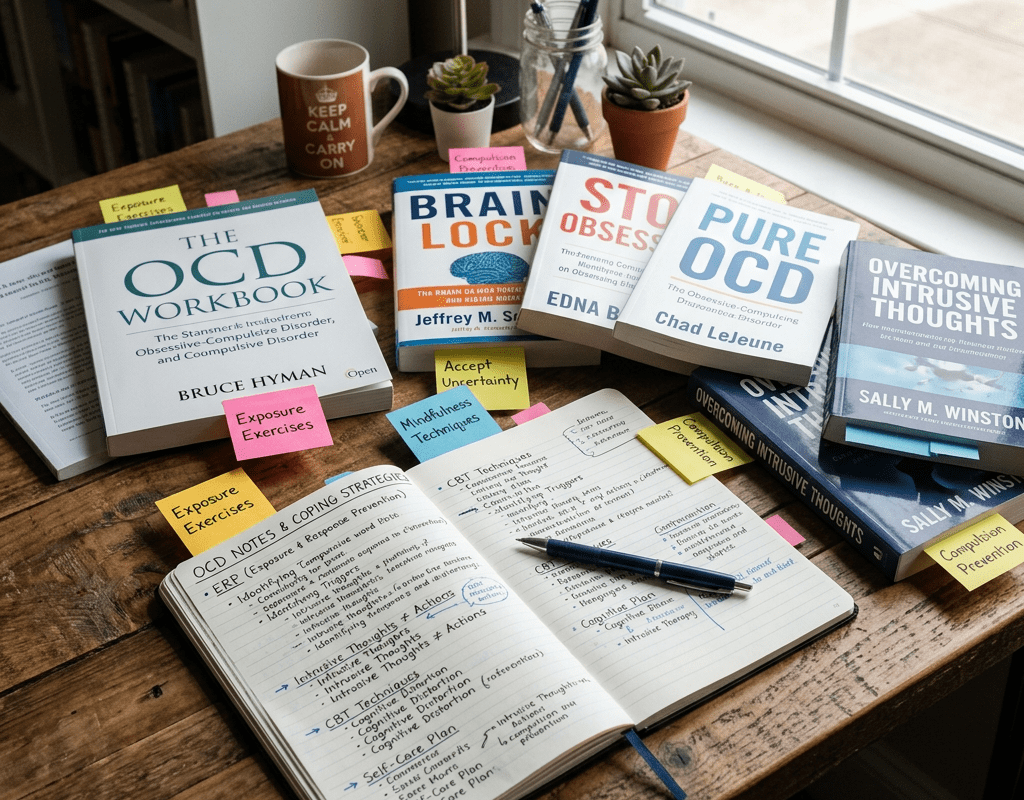
Books and notes about obsessive-compulsive disorder with highlighted coping strategies and sticky notes

Having had OCD for 30 years I’ve come to realise how important it is to have a few easily accessible resources and a plan of action in place for those times that, despite our best efforts, we end up spiralling.  

It’s very easy in the good times to forget how hard and dark it can be but when we are feeling good we should take a bit of time to get organised with what helps, just in case.

Let me try to explain in a bit more detail what I mean. 

In an ideal world we would learn how OCD works – a glitch in the good enough system – get really good at sitting with that uncomfortable feeling (doubt and uncertainty), let our nervous system do its thing and reset on its own back to base line and carry on with our day. 

And while this is all good in theory and doable a fair amount of the time, it is my experience that recovery isn’t a straight line and there will still be times when we get caught by an OCD obsession. 

Here are some examples of circumstances that can make OCD stickier;  Nighttime can be tricky, as well as when I’m particularly tired, if I’m already sitting with a trigger and then another one piles on top, time of the month for ladies, a new theme appears and takes you by surprise, or a difficult life circumstance such as illness, coping with loss, or stress to name a few. 

All of these will affect our resilience and ability to manage our OCD effectively; I’ve definitely noticed that the exact same thought can effect me differently depending on my resilience level.   

At these times, when we’re spiralling despite our best efforts to let things be, I’ve found it can be helpful to have a few resources to hand, they help remind me of OCD’s wicked and insidious ways and switch on the prefrontal cortex enough to pull me back. 

I personally have a notebook filled with all my favourite advice and information from a wealth of people and books I’ve read over the years.  Some of which I’ve shared below. 

As well as this I’ve finally started to populate my resources page, if you get a chance go and check it out and let me know what you think or if you know of any other useful resources I can add.  I will continue to update this page as time goes on.

I really hope it helps! 

Highlights from my notebook

A thought on Thought-Action-Fusion

Why would you torture yourself over anything less than 100% certainty?  Fear lives in the vague after all and it’s my guess, it’s just a thought (obsession), attached to a feeling of uncertainty, that you’re basing your rumination on, not facts. 
Your brain is probably desperately trying to work out whether there is something genuine to be concerned about, you should take this as your sign that there isn’t

A couple of quotes from Dr Stephen Phillipson

‘You can’t use feelings to make determinations based on whether a threat is real. Doing so is like asking the devil for directions to heaven’.

‘Why focus on something you have NO control over?’
‘It’s never going to not feel scary. ‘

An insight from Martha Beck

Ask yourself:  ‘Am I struggling?’  If the answer is ‘yes!’ then you’re spiralling, step away. 

Useful information from Prof. Steve Peters:

‘If you wake during the night, any thoughts or feelings you might have are from you chimp (emotional) brain and they are very often disturbing, catastrophic and lacking in perspective.  In the morning you are likely to regret engaging with these thoughts and feelings because you will see things differently. ‘

Some ponderings from me:

  1. At night time the rule I try to stick to is – Don’t engage between 10.30pm-6am – acknowledge the thought and set aside some ‘worry time’ the following day if needed, when the rational brain is switched on and working.
  • Know that giving into a compulsion will trigger your fight or flight response and once this happens all reason and logic will disappear.  There is no good outcome to giving into a compulsion, it just confirms to the brain there is something to be concerned about and keeps the OCD cycle going. 
  • There’s always another ‘what if?’ or ‘maybe?’, remember logic is limited but imagination isn’t.

There’s so much more from where these came from, so don’t forget to like and subscribe to make sure you don’t miss out! 

Let me know if any of these are useful to you too in the comments below. 

As always, you’re not alone, your thoughts are not special and you’re stronger than you know!
Stay Strong xxx

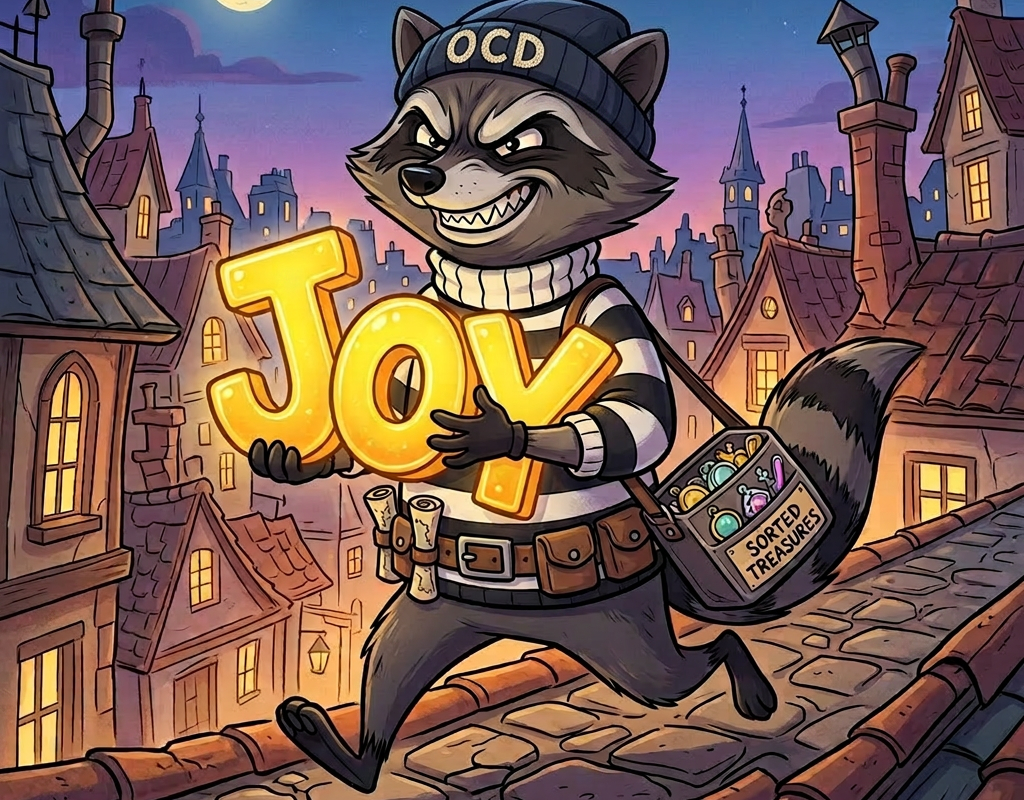
OCD – The Thief of Joy

Raccoon wearing a beanie and striped sweater carrying a glowing 'Joy' sign and a bag labeled 'Sorted Treasures'

You may have heard that famous quote:

‘Comparison is the thief of joy’ – Theodore Roosevelt

and well this is no doubt true, I would argue that OCD is actually a pretty good contender too. 

To experience joy, we must be open to experiences, receptive to others and be able to appreciate the world we live in, not only that we also need to feel like we deserve to be joyful.

All of these things require us to be in our parasympathetic nervous system (rest and digest); we need to feel relaxed and at ease with the world around us, not overwhelmed by it.    

Unfortunately when we have OCD, we are rarely in our parasympathetic nervous system, we spend a lot of time in our own heads, dysregulating ourselves (fight or flight) with imagined realities, compulsions and overthinking.  All this means we are less receptive to the world around us, less productive and sadly less able to experience joy. 

Add to this the fact that when you have OCD you don’t always feel like you deserve to have joy in your life.  In fact you can feel quite the opposite, that you’re not a great person and instead of trying to find joy you beat yourself up and make yourself feel even worse! 

Remember, OCD is not your friend, it’s not trying to help you, build you up or make you feel good.  In fact given the opportunity it will tear you down piece by piece until there’s nothing left.  Yes, it sounds brutal and relentless and just like the high school bully, that’s exactly what it is!!!! 

A large student with crossed arms confronts a smaller student smiling and holding books in a school hallway with lockers and bulletin board

OCD – The distractor

I’ve been reading some yoga books recently and I came across the following quote, from Brightening our inner skies (beautiful title) by Norman Blair, which really resonated with me:

My disorderly awareness deprived me in the midst of plenty’ – John Tarrant

In the book Norman talks of reasons people seek out meditation, this was John’s reason. 

You don’t have to have OCD to notice that the mind likes to pull you away from the present.  In fact, in today’s society, with our attention being a source of income for big companies, it’s getting ever harder to just be ‘in the moment’. 

It also resonated with me on an OCD level.  I realised that my OCD constantly pulls me away from the things I care about, my life and family, depriving me from experiencing joy and happiness and disrupting my memories – oh yes, when dysregulated memory gets distorted too. 

How then do we stay present when OCD is so intent on pulling us into an alternate reality, of its own making, to distract us from all that we have and want to be? 

Are you able to pause and notice the nonsense? 

When I have days where the OCD is less sticky, I am able to see the constantly changing nature of thoughts and the mind for what it is.  It’s truly fascinating just how many avenues the mind tries to pull us down daily. 

It’s like standing in the middle of a storm, the wind is trying to pull you in one direction, the rain is pushing you in the other.  Your job is to stand there and watch with no attachment or investment in any way.   

Man in green raincoat with backpack bracing against cold wind and rain by stormy seaside

So much energy and mental effort for what?  In times of dysregulation the brain can take you anywhere and tell you anything and it all seems plausible.  It can make you think that repeating actions, counting numbers, replaying conversations, has a point, when in reality, it’s all just wasted time and energy. 

Once you recognise this and stop, it can all start to feel a bit empty.  Maybe regretful that you’ve wasted so much time and energy on an imagined reality.

How do you feel about finding stillness and being more present?  Is it tricky for you?

Maybe sit now and take a breath, notice what’s around you, feel the ground underneath your feet and the air on your lip as you breath in.

Does it feel easy, hard? 

It can take time, the brain won’t like it to start but think how much more energy you will have and more connected you will feel when you stop letting OCD steal your mental headspace and joy.    

I would love to know your thoughts on my ramblings, do you feel like joy is hard when OCD is loud?  Have you found any good ways to ground and reset your nervous system?

As Always, you are not alone,
Stay Strong xxx

Overcoming OCD: The Role of Expectancy Violation

In last weeks post I touched on the subject of expectancy violation and I thought it was such an important topic that it deserved its own post.   

What is Expectancy Violation I hear you ask?

It is a core mechanism in Exposure and Response Prevention (ERP) therapy, where a patient’s obsession is disproven by facing the fear (obsession) without doing the compulsion. By violating this expectation, the patient learns that their fear (obsession) is manageable, and their obsessive beliefs are false, which promotes long-term recovery. 

ERP therapy is all about proving to your brain that your OCD obsessions are unfounded and based on dodgy data.  We can only prove this to our brains by sitting with the obsession when it comes in and not partaking in the compulsion. 

Sounds easy right?  Well last weeks post was all about how the brain can make, ‘just sitting with it’, feel like a life or death situation and no I’m not exaggerating, anyone suffering from OCD knows this first hand.

The brain believes what it sees and it’s only action or sometimes inaction that can rewire the ‘faulty OCD circuitry’, currently running.    

I realise ‘taking action’ can be hard and sometimes it can feel useful to sit and consume podcasts, books, blog posts and reels on OCD instead. This can make us feel like we’re ‘doing the work’, and don’t get me wrong I do truly believe psychoeducation plays a large part in OCD recovery but the real work is done out there in the real world, when you’re not making your life smaller to avoid triggers.

It’s only when you take part in your exposures, reframe from doing the compulsion and see that the ‘expected’ outcome doesn’t actually happen, that you receive this unbelievably important input – the expectancy violation – which then starts to rewire your brain with better more accurate data.

You have to remember to keep on pushing outwards so OCD can’t push you inwards. In my experience if you don’t continue to push yourself out of your comfort zone regularly then the ‘weeds’ (OCD obessions) start to sneak back in.

My advice therefore is to try and make ERP a lifestyle choice. When we accept our anxiety, knowing it’s a normal part of being human and carry on anyway we are winning against OCD. 

Are you still pushing out of your comfort zone each week? I’d love to know what you’ve been up to, let me know in the comments below so we can help inspire each other.

If you, like me, need a reminder now and again to keep on trying new challenges and exposures, then you might find one of my wellbeing journals useful. They have a weekly ‘Comfort Zone Cracker’, where you can set yourself small manageable targets to hit. It’s a fab companion for ERP therapy and life in general, they’re available from amazon and you can find the links to them here.

I really hope this post has been helpful,
As always, Stay Strong xxx

A Missing Piece in OCD Recovery

Perhaps you’ve had OCD for a while or maybe you’ve recently been diagnosed and you’re looking for helpful information, either way I feel like the following can be useful going into OCD recovery and isn’t always highlighted by therapists.

If you receive therapy through the standard route then you’ll be advised to undertake a course of CBT therapy in the form of ERP (Exposure response prevention), which is the current gold standard for OCD treatment.  

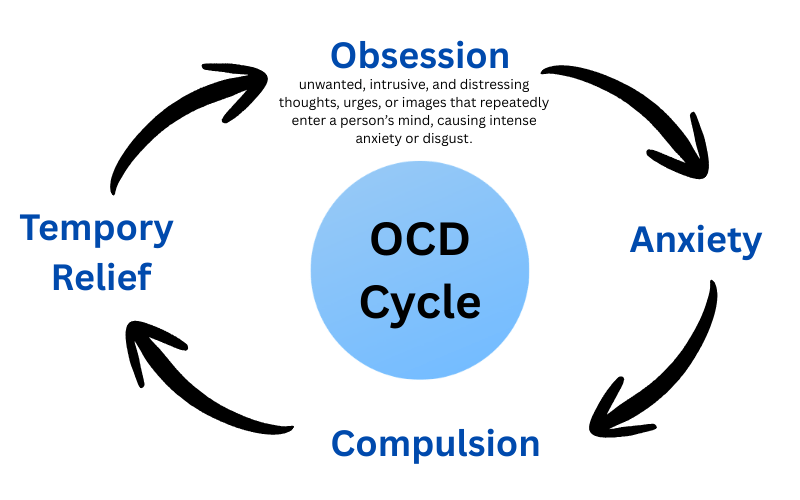
Here you’ll be introduced to the OCD cycle

And then told the way to break this cycle is to create a hierarchy of your OCD obsessions and then slowly and in a controlled way, exposure yourself to these obsessions and sit with the associated anxiety, rather than complete your compulsion.

This is indeed a very successful treatment for OCD and sounds wonderfully simple, fantastic you think, I can do this, my OCD will be gone in a matter of weeks and yes this could well be true.  

You’ll hear about how you must ‘sit with the anxiety’ and ‘ride the wave’, because any amount of paying attention to the obsession or taking part in the compulsion will just feed the cycle and make it worse, again all true. 

You sit in the safety of your therapist’s office and think, ‘yes I can do this, it all makes sense’ and it does, I’m not debating the logic and success of ERP therapy, it really is the best way to get rid of OCD.  But what, in my opinion, they don’t pay enough attention to, is how unbelievably hard it is to sit with anxiety, particularly at the start.

Now I’m not trying to scare you or make you feel any worse than you probably already do but it’s important to understand the reality of ‘sitting with anxiety’ as it is, I believe, a life changing skill you have to learn. 

When you’re in your therapist’s office, away from your triggers, having a nice chat about anxiety and the OCD cycle, this is a whole different ball game to being out there in the real world and so you need to set yourself up for success. 

Picture this, you leave your therapists office full of optimism and hope for your OCD recovery. You get home and get yourself organised, you feel positive, confident and hopeful and then have a go at your first exposure, the anxiety sets in, you feel overwhelmed, all logic goes out the window and you complete the compulsion, after all, ‘just this once wont matter, I’ll sit with it next time’.

So why does it feel so manageable and make so much sense in the therapist’s office but then when you come to do, ‘the work’ it feels impossible?   

Well, when you get triggered by your obsessions, you are thrown into your sympathetic nervous system, (fight or flight), this system is there to keep you safe and alive from potential threats and for whatever reason your brain sees your OCD obsession as a threatening situation – OCD is actually a ‘fault’ in this system.
 
When in fight or flight your brain is designed to get you out and away from these situations asap and so ‘just sitting with it’ although good in theory, can feel unbelievably impossible.
This system is powerful and it overrides your thinking brain, you lose the ability to access logic, perspective taking, rational thinking and working memory among other things – I’ve talked more about this in a pervious post if you’d like more information here. 

Suddenly what made perfect sense in your therapists office, seems impossible to even access, let alone execute successfully.  Your brain is literally telling you to get out of this situation as quick as possible, do the compulsion, whatever it takes to relieve the anxiety and distress.      

Now I’m not telling you that you don’t have to find a way to sit with this survival mechanism, which by the way has kept the human species alive for thousands of years, it just means you need to have the knowledge and tools in place beforehand, so you’re prepared.  All this will help you to sit with that feeling when it comes and not complete the compulsion.

Know that your brain will think you’re in a life or death, all or nothing situation and that that is normal

It will feel like you’re about to jump out of a plane not knowing if your parachute is packed correctly. This might sound extreme, but this is what your brain thinks the OCD obsession means and it will do everything it can to keep you safe.    

Knowing this has helped me on numerous occasions to keep moving forward, take that next step and sit with it, it has given me the grit to move past OCD obsessions which in the moment have felt too much to handle. 

So how do you prepare yourself?

You need to have this information accessible for when you are triggered, it will confirm that how you’re feeling is normal, as when you’re in a dysregulated state of mind you won’t be able to remember. 

I can’t count how many times this has helped me sit with the anxiety and not complete the compulsion.

Ah but does this become a compulsion in itself? I hear you ask…

…I don’t believe so, as eventually, it WILL build a new pathway in the brain and you WON’T need the notes, you’ll notice you’re in fight or flight and you’ll have the knowledge and experience that this is normal and it will pass, I’m not in a life-or-death situation, it’s just my OCD. 

But you only get to this stage by sitting through it at least a few times and proving that to yourself.   Remember the brain learns from experience and expectancy violation (a core mechanism in Exposure and Response Prevention (ERP) therapy, where a patient’s feared outcome is disproven by facing the fear without doing the compulsion. By violating this expectation, the patient learns that their fear is manageable, and their obsessive beliefs are false, which promotes long-term recovery. ) is unbelievably powerful in all aspects of our lives, not just OCD recovery. 

So use the notes to disprove the need for the compulsion and once your brain has enough evidence to know the compulsion is useless, you won’t need the notes anymore. 

I know it can feel impossible; it’s supposed to and that’s completely normal.  Know that when your therapist says, ‘just sit with it’, what they’re actually saying is:

‘your brain is going to tell you that the world is going to end and you have to do nothing about it’. 

The good news is that once you’ve sat through it a few times you start to see that the obsession didn’t happen and it was just OCD.  This is the moment you start to take your life back and boy what a feeling that is. 

Remember your brain is just trying to keep you safe from what it thinks is a life-or-death situation and it is going to do everything it can to stop you. You have to say:

‘thank you brain, I see that I’m having an OCD thought, I’m going to let it be and carry on with my day, aligning to my values’.    

Quite a tough one today but having confirmation of how hard it can be and what you’re up against is important for recovery.
I really hope it helps you as much as it has me,
As always, Stay Strong xxx


Overcoming OCD: Letting Go of the Rope

I have had OCD for what is fast coming up to 30 years. As I quickly approach my 41st birthday it can sometimes feel like I’ve been fighting a war inside my brain for what feels like forever.  I’ve read all the books, listened to the podcasts, had a couple of rounds of therapy, trained as a yoga teacher and PT, I look after my nutritional and physical health, and choose to share what I’ve learnt in the hope of helping others through my blog, Instagram posts and workshops. 

So why I ask myself do I still struggle at times?  Why does the world still feel overwhelming & why won’t my nervous system just relax already? 

Maybe my expectations are too high?  I had a therapist once say to me that I might just have to ‘accept the fact that I’m an anxious person’, not really what you want to hear but then expecting to find total inner peace is probably a little unrealistic too I realise.     

I know Steven Phillipson says, ‘I don’t care how you feel, continue with your day aligning to your values’ and I try to do this. It is in fact how I’ve managed to achieve everything I have over the last 10 years but I do sometimes wonder how much noise is normal?

I wrote in a post a while back: ‘When we have OCD, Fight-or-flight can turn into a trait instead of a temporary state!’ and this is how I feel, like I’m stuck in fight or flight most of the time. My ability to relax, be in the moment and not feel overwhelmed is seriously lacking.    

I feel like I’ve been on a mission the last few years for answers – which I now realise may be a sneaky compulsion of mine, eek!   Maybe what I should have been doing is letting go of the rope – another ACT metaphor which I love.

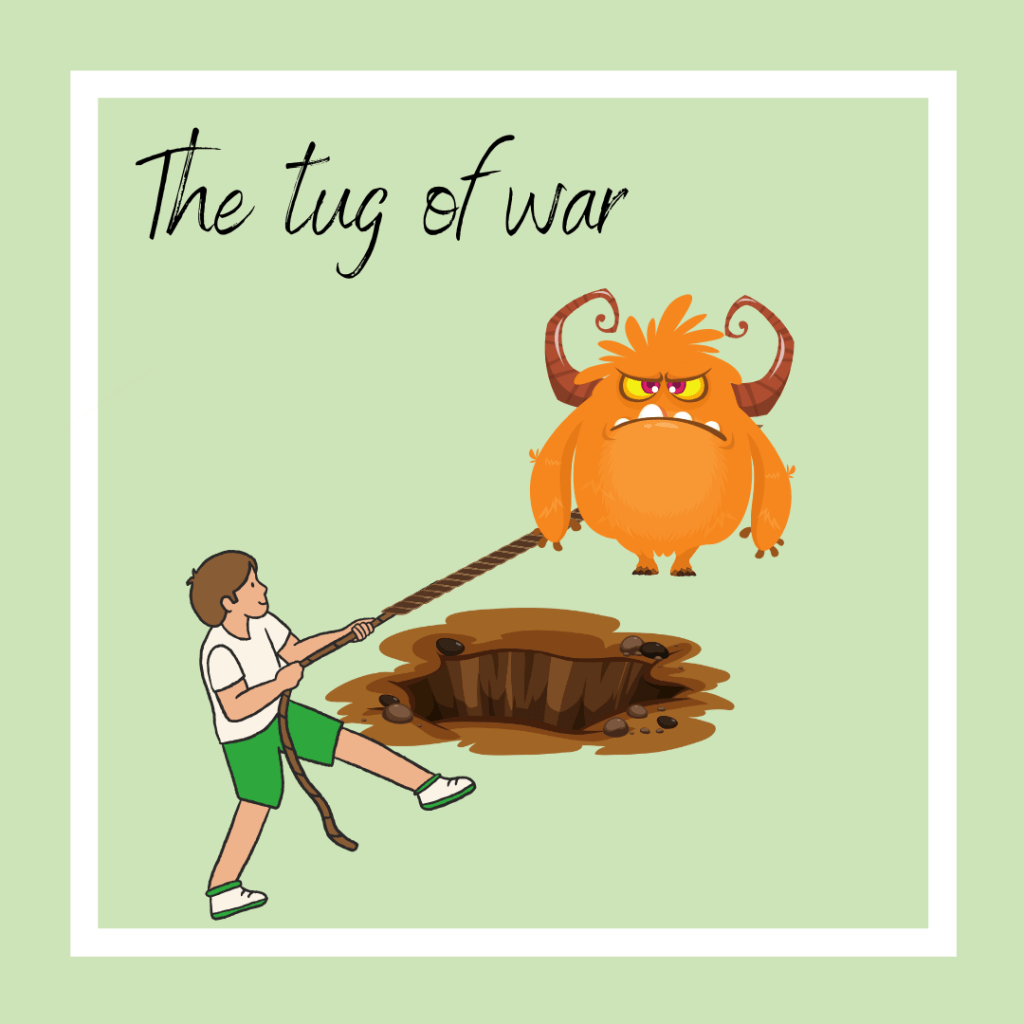
This ACT metaphor illustrates how struggling against your obsessions (the monster) is a never-ending fight, but Letting go of the rope and not engaging with your intrusive thoughts, accepting the presence of them and carrying on with your life while aligning to you values is your way to freedom. 

Breaking it down a bit further:

  • The Monster: Represents your OCD obsessions.
  • The Rope: Represents your attempts to control, avoid, or eliminate these obsessions with compulsions.
  • The Pit: Represents the fear of being consumed by, or drowning in your obsessions.
  • Letting Go: Means dropping the rope (not completing the compulsions) and ceasing the battle, not necessarily defeating the monster (obsession). 

We need to recognise that fighting our obsessions is exhausting and ultimately ineffective, allowing our difficult thoughts and feelings to be present without fighting them is the key, this then frees up energy and attention to focus on what actually matters. 

I wonder then have I secretly been pulling on that rope and keeping my OCD alive with all my research and development?  Argh! Does it all actually come down to my inability to just stop and sit with the feelings?

As I head towards my 30 year anniversary with OCD, I need to acknowledge that some education with OCD is important but then try to recognise where the line is between being informed and it being a compulsion.  

Have you got any sneaky defaults which are keeping your OCD alive and kicking? Do you feel like you’re doing everything right but you’re still struggling too?  

Maybe try and keep a list this week, whenever you notice yourself doing something unnecessary because of your OCD, write it down, awareness is the first step to being able to change these traits, which we have unknowingly accepted into our lives. 

On a more positive note and bringing some hope back into the conversation. I do have the odd occasion when I come out of fight or flight and it feels so wonderful.  It feels like what life should be, I’m present, in the moment and experiencing life as it could be, full of opportunity and joy.  

If I have one target for the next 40 years it’s to spend as much time as possible out of fight or flight and if I can achieve this I will be a very happy soul. I want to be able to enjoy life without rushing through it, listen when people talk, take joy in the small things and the process of getting to them.      

Let me know if any of this resonates with you.  It can be very lonely at times to have OCD, and community can help us feel that less.
A bit of a heartfelt one this week as I approach that 30 year milestone but sometimes that’s what’s needed.

As always, you are not alone,
Stay Strong xxx

ACT Metaphors for OCD Recovery

I’ve written a lot recently about how when we have OCD, if we give into our compulsions we are likely to be plunged into our sympathetic (fight or flight) nervous system.   

This is an issue as when in this state we are unable to think rationally and our intrusive thoughts can feel all overwhelming. 

There are some great ACT metaphors which we can use to illustrate this concept, below are 3 of my favourites, let me know which one’s yours:

1. The fog

When an OCD thought comes in imagine it like fog being blown towards you.  You have the choice, at this stage, to not participate, let the thought be and wait for the fog to dissipate or you can give into the compulsion.  Every time you give into the compulsion, whatever it may be, imagine a new layer of fog being blown towards you, further damping your ability to see clearly.

2.Ripples on a pond

Here the OCD obsession is like a stone being thrown into a pond.  If we do nothing and let it be the ripples will soon disperse and we will be able to see clearly again. If however we give into the compulsion it’s the equivalent of throwing a new stone in every time.

3.The bus stop

Here we see that before we are triggered we are standing at the bus stop watching the traffic go by.  If we then get triggered and give into the compulsion it is the equivalent of walking out into the road and being surrounded by the traffic, therefore not being able to see clearly.

There are plenty more of these metaphors out there, if you’ve found these ones helpful why not have a look around for some others or if you know of another helpful one then add it in the comments below, I’d love to hear it. 

I do think the metaphors can make it all seem very easy to just draw yourself back out of fight or flight. I don’t for a second want to belittle how hard this is to do when you’re in it, believe me I know, but it can help to show what the effect of giving into an OCD compulsion can be and hopefully it gives you another tool and incentive to not give into those compulsions when they come along, they really do only lead to misery. 

I really hope it helps, as always remember you are not alone.
Stay Strong xxx 

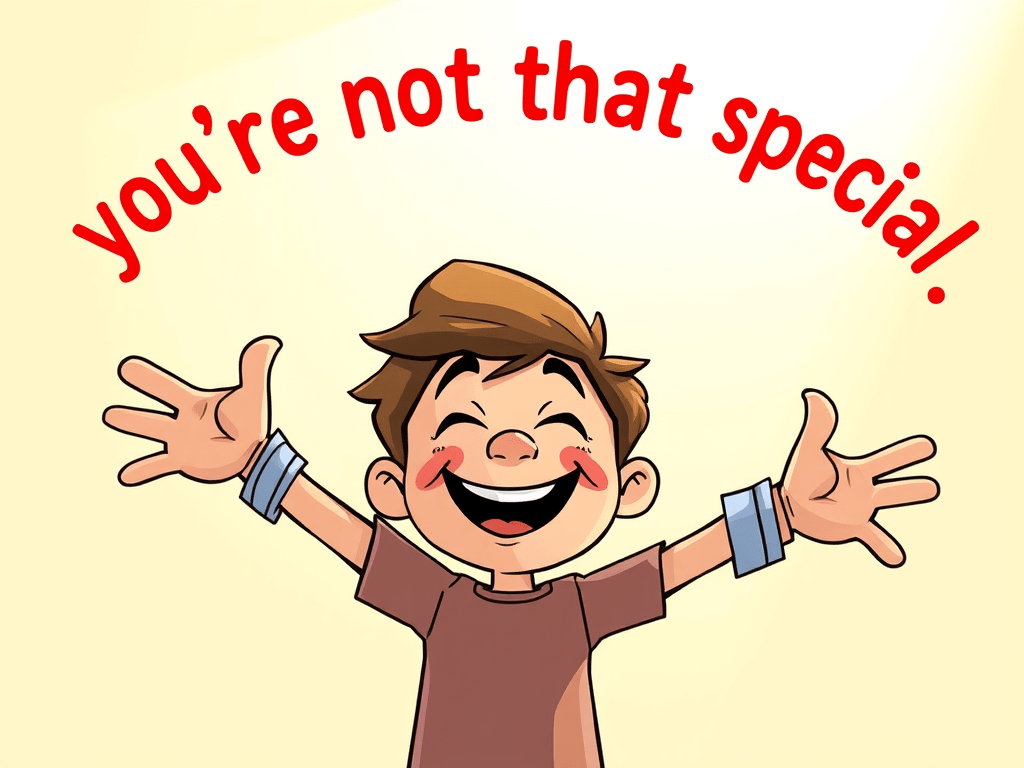
OCD: Your thoughts are NOT special! 

A small idea with a big impact which I’d like to share with you today is a statement I heard on a podcast:

‘You’re not special’

It sounds kind of simple and maybe a bit mean but as humans we generally like to think of ourselves as being unique and different from everyone else. 

The reality of thinking in this way however is that it can make us feel that our problems/issues/intrusive thoughts are unique too.

This is an issue, if we think our problems are unique then we can believe them to be unsolvable.

When we have OCD we think, ‘no one else will have had these thoughts before’, this can lead to us becoming isolated and withdrawn.

The reality however is that we’re not that special and the more likely scenario is that multiple people will have experienced the same thoughts you have. 

Our brains like to keep us isolated and trapped believing it keeps us safe, but I’m here to tell you:

THIS IS RUBBISH!!

A side note here to say when it comes to OCD I would go to a OCD therapist, rather than a friend, as they will have the training to help you understand what is going on and see the thoughts for what they are – faulty signals being sent from your overactive amygdala. 

A short one today but such a powerful idea, which always helps me when I think of it. 

I really hope it helps,
Remember you are not alone and you’re not that special either! 
Stay Strong xxx

Conquering OCD: Recognizing Fight or Flight Responses

In my last post I talked about the threat bucket metaphor and how it relates to our resilience levels – if you haven’t read that one you might want to go and check it out first – link to pervious post.

In this post we’re going to look closer at why it’s particularly bad for your bucket to overflow when you have OCD and why your self-care is of the upmost importance. 

Why it’s so bad for OCD when your bucket overflows?

When we have OCD we want to do everything we can to keep our resilience as high as possible, why? 
Well, when in fight-or-flight, our brain shifts into ‘survival mode’ this, like OCD, changes how you think, not just how you feel.

Our goals switch to speed and safety over accuracy, nuance and long-term reasoning – not what we want when dealing with OCD intrusive thoughts. 

Here’s a summary of what’s happening in the brain when our resilience drops (bucket overflows).

1. Our brain’s “thinking centre” goes offline – The prefrontal cortex (responsible for reasoning, planning, empathy, and impulse control) becomes less active.

This means:

  • We have a reduced ability to think logically
  • Difficulty seeing multiple perspectives
  • Poor working memory (“I can’t think straight”)
  • And more impulsive reactions

You’re not choosing this—blood flow and neural activity are redirected away from this area.

2. Our threat-detection system takes over – our amygdala and related limbic structures start to dominate.

This means our thinking becomes:

  • Threat-focused (“What’s wrong?”)
  • Binary (safe vs dangerous, right vs wrong, black vs white)
  • Fast and reactive
  • Emotion-driven

Our brains are asking one question only: “How do I survive this?”

3. Cognitive narrowing occurs, Fight-or-flight (an overflowing bucket) causes tunnel thinking.

You may experience:

  • Fixation on one detail or outcome
  • Loss of creativity and flexibility
  • Difficulty accessing learned skills – this is why prepping in advance for triggering situations is so important
  • Overgeneralization (“This always happens”)

This is efficient for survival—but limiting for problem-solving and not where you want to be when experiencing intrusive thoughts.

4. Biases increase – in survival mode, the brain relies on shortcuts, common thinking patterns include:

  • Catastrophizing
  • Mind reading (“They’re against me”)
  • Personalization
  • Black-and-white thinking

These are not “bad habits”—they’re stress (OCD)-induced neural shortcuts.

Understanding all this helps you realise that you can’t reason or ruminate your way out of fight-or-flight (OCD)—you regulate your nervous system first. Thinking comes back after ‘safety’ is restored.

BUT…
…how do we know if we’re in fight or flight in the first place?
and
…how do we get out of it and stay out of it when our amygdala keeps letting off faulty signals all the time?
I hear you ask.

Honestly it can feel impossible at times, I get it! 

First things first, the best way I’ve found to work out if I’m in fight or flight is from Martha Beck:

Ask yourself:
‘Am I suffering/struggling?’

If the answer is, ‘yes’ then you can almost guarantee you’re in fight or flight.   
There’ll be no logic involved, you won’t be thinking rationally – you need to stop.    

Our bodies are designed to move between rest and digest and fight or flight naturally and if you can recognise you’re dysregulated and sit with the uncomfortable feeling then great, do that.

I have however found some nice ways to speed up the process, so you can start to see things more rationally more quickly!   

Here are some of the best tools I’ve found to come out of fight or flight when in it:

  1. Creativity – this will mean different things for different people but creativity is amazing at switching on a different part of the brain, drawing your attention away from the catastrophizing part. Quite often if you can focus on creating something, whether it be a piece of art, a yoga sequence, something in the kitchen, garden, workshop, on the computer, anything that gets you thinking outside the box, you will start to draw your attention back to a more balance place.
    What’s your creative outlet?
  2. Curiosity – This can be curiosity about anything, quite often when we become curious and interested in something it grounds us and pulls us away from that extreme black and white thinking. Try asking why? Maybe investigate how something works or why it’s the way it is.
    Have you ever wondered about anything?
  3. Humour – is fabulous for getting the brain to switch modes. It works because its unexpected, remember the brain is a prediction machine and it’s pretty good at it. When a joke comes along and it doesn’t end where the brain think it will, BAM! You’re out of default mode and the brain is switched on and listening.
    Do you like any particular comedians? Go and look up one of their new sets online.
  4. Awe – part of the joy of being human is our ability to find awe. It can really give you some perspective when you look at the stars, birds, clouds, landscape etc. Going out into the world and finding things that make you think, wow! Is very important to our wellbeing and it helps us reset.
    What brings you that feeling of awe?
  5. A Challenge – this can be tricky when you’re in fight or flight but something which I found fun – from Martha Becks book – was to try and write your signature backwards. It takes a huge amount of focus and is very grounding. Go on, give it a try!
  6. Foundations Work – movement, nutrition, sleep, relaxation & social connection.  This takes an element of doing what you know is good for you, even when you don’t feel like it. We have to take action first, do the things we know make us feel better in the long run, your body and brain will thank you.

I really hope some of these methods are useful for you, give them a go and see what works.  It can be very individual which is tricky but once you’ve found the thing that works it can be seriously life changing.  Once back in rest and digest quite often we can let the thought go and see it as completely irrational, but if not, at this stage we can work through Byron Katies, questions.

Ask yourself:
Is it true?
Is it 100% true?  If the answer is no – which it always is in the case of OCD as it is based in doubt and uncertainty – then:

YOU HAVE TO LET IT GO!!!!!!

As I said in one of my previous posts, why would you torture yourself over anything less than 100% certainty?

I really hope this post has helped you to understand the role the nervous system plays in OCD and why it’s so important to recognise when you’re in fight or flight and find useful ways to bring yourself back. Only when out of fight or flight can we rationalise, think clearly and see OCD thoughts for what they are, just thoughts.

And if you ever wanted a reason not to complete a compulsion in the first place then remember, every time you give into one of those unwanted, intrusive, and distressing thoughts, images, urges, or feelings you’re filling up your bucket a little bit more and getting closer and closer to fight or flight, where it all starts to fall apart! 

Leave that thought be and carry on with your life aligning to your values. 

I really hope this post helps, education and knowledge are so vital for OCD recovery,
As Always, you are not alone,

Stay Strong xxx  

Breaking the Cycle: Overcoming OCD Compulsions

I wrote last week about how when we get triggered by OCD obsessions (unwanted, intrusive, and distressing thoughts, images, urges, or feelings), it’s a faulty signal from our amygdala (part of the brain responsible for detecting potential threats), if we then give into the compulsion (a repetitive behaviour or mental act) it confirms the threat and fully triggers the fight or flight response in our body. 

Why is this an issue? 

Well, when in fight or flight we don’t tend to think rationally, we’re in survival mode and though this system can be useful at times, when it comes to OCD it’s not the place we want to be. 

It allows the irrational use of compulsions to ‘neutralise’ thoughts seem rational.  We see ourselves doing things we know are senseless, like retracing our steps, washing our hands multiple times, repeating safety phrases in our heads or ruminating endlessly on thoughts, but for whatever reason the brain has convinced us it will help. 

This is wrong, in fact compulsions do nothing but cause us more distress, more uncertainty and less trust in our own ability to cope!

So why does our body do this? 

According to ChapGPT it serves the following purposes:

The brain prioritizes speed over nuance.
In a threat situation, the amygdala, pushes the body to act quickly. Nuanced thinking takes time; survival favours rapid, simple judgments like safe vs. unsafe, friend vs. foe, stay vs. run.

It reduces cognitive load during stress.
Under high stress, the prefrontal cortex (responsible for reasoning and complex thinking) becomes less active. The brain simplifies decisions to conserve resources.

It minimizes hesitation.
Ambivalence can be dangerous during real threats. If you’re being chased, you don’t want to think:
“Well, maybe it’s dangerous, but maybe it’s not, and perhaps I should consider my options…”
You want an immediate, decisive action.

It helps coordinate the body’s physiological response.
Fight-or-flight relies on a clear appraisal: threat = act. Black-and-white thinking helps the brain send a strong, unified signal.

Why is this an issue in OCD?

When we believe our obsessions, which are being prompted by a fault in this system and give into our compulsions, we are triggering our fight or flight response repeatedly, the cascade of issues this causes is as follows:

The brain learns:

  • Ambiguity = risk
  • Nuance = unsafe
  • Only extremes are predictable

So the nervous system keeps simplifying the world into binaries—even when there is no threat!

Our amygdala becomes hyper-reactive

A sensitized amygdala reacts to mild cues, (OCD obsessions) as if they’re major threats. This leads to rapid, black-and-white judgments like:

  • “That bump in the road might have been a person”
  • “I had a negative thought when I turned on the light, maybe I should turn it off again and make sure I think positive thoughts when I turn it on this time, just in case.”
  • “There’s a tiny mark on that apple, I should probably throw it away and get another one, it’s probably poisonous.”

The prefrontal cortex, responsible for reasoning and nuance, gets less access as chronic stress reduces blood flow and connectivity in regions that support:

  • Perspective-taking
  • Emotional regulation
  • Tolerance for uncertainty
  • Gray-area thinking
  • Long-term planning

In this state, the brain defaults to simple categories because complexity feels overwhelming.

When we have OCD, Fight-or-flight can turn into a trait instead of a temporary state!

When the sympathetic nervous system (fight or flight) stays activated long-term, the cognitive style that evolved for emergencies becomes our everyday thinking. 

This is why giving into OCD compulsions, even one, is only ever going to lead to more distress, more compulsions to try and relive that stress, sending you freefalling down that rabbit hole. 

We need to realise that the compulsion is not keeping us safe and remove it’s usefulness. 

I know from years of experience with OCD that there’s always another ‘what if?’ or ‘maybe?’ and whenever I’ve given into a compulsion all I’ve done is made things worse. I become withdrawn, irritable and irrational, simple tasks get overwhelming and life becomes very challenging. 

I understand it can feel impossible at times not to just do the compulsion, ‘just once more won’t hurt, I’ll sit with it the next time’ – sound familiar?  But I know from experience that it’s never going to feel easy, it’s always going to be challenging.

However knowing that the compulsion is useless, serves no purpose and will only make things worse, helps give me the strength to not give in.

I really hope this information helps you too. Let me know what you think in the comments below.
As always,
Stay Strong xxx

Expect and Accept: Overcoming OCD Thoughts

‘Expect and accept’, is a new mantra I’ve been trying out recently. 

I’ve found It can be helpful when managing OCD thoughts day-to-day to have a mantra to act as a ‘switch’ for the brain, helping you to label the thoughts as OCD and move on. 

Obviously in an ideal world you wouldn’t need it but it can be so easy at times to get dragged into OCD thoughts and before you know it, you’re freefalling down a rumination rabbit hole and all sense of reality has gone.

Don’t be fooled by the cute bunny, he may appear to be your friend but believe me he isn’t!

At times like this it can be so helpful to have a little reminder, like a therapist in your ear, saying to you:

So let’s be clear here, by saying ‘expect it’, I’m not saying, lets invite those thoughts along or will them to be there.  It’s more about having an awareness that if you’re going into a triggering situation, a new environment or out of your comfort zone, then it’s highly likely that your OCD will want to come along for the ride. 

I’ve found at times that I can get frustrated with my OCD when it turns up and what I’ve learnt over the years is if you don’t want it to be there, then it’s almost guaranteed to be.

When it does, if it does, we need to accept it.  We can do this by saying, ‘Thank you, brain that’s exactly what I wanted to hear right now’.

After all OCD recovery is not about getting rid of the intrusive thoughts, this is a common mistake, remember everyone gets them. So it’s more about allowing them to be there and then carrying on with your day regardless, aligning with your values. 

I realise how hard this is, but know that you are not alone and that every time you carry on with your day, despite the thoughts, you are making progress and the brain is learning it doesn’t need to freak out at every thought that comes into your mind.  

Why not give the mantra a go this week and see if it helps you too. Let me know how you get on in the comments below.

Remember: ‘Expect it and Accept it’

As always,
Stay Strong xxx