
One of the greatest insights into the brain and how it functions for me was when I learnt about the reticular activating system or RAS for short.
I first read about the RAS in Jim Kwik’s book, Limitless – which I would highly recommend.
He states that:
‘Every second, your senses gather up to 11 million bits of information from the world around you….
…The conscious mind typically processes only 50 bits per second. ‘
The RAS system plays an important role, 11 million is a lot and would be completely overwhelming if it all got through to your conscious awareness, so the RAS, filters out most of the information coming in.
How does it know what to let through and what to ignore? This is generally based on where you focus your attention!
Have you ever noticed when you’re shopping for something new, like a car, you suddenly start seeing the one you’re interested in all over the place?
I remember when my husband and I were looking for a new front door. I’d never looked at anyone’s front door before in my life, but all of a sudden I knew what everyone’s front door on my entire street was like. We’ve now purchased our front door, and since then I’ve had no interest whatsoever in anyone else’s – my brain has stopped drawing my attention to them.
Another interesting example of this was when my husband and I went for an anniversary meal one year. We were sitting in a beautiful conservatory enjoying a wonderful meal and I made a comment about one of the flower displays and how interesting the vase was. My husband – generally much less interested in flowers and much more interested in technology – commented that he hadn’t even noticed the flowers but was looking at how they had discreetly wired in the sound system speakers – something which I had little interest in, so hadn’t noticed.
Isn’t it fascinating how two people in the exact same space and moment in time can be experiencing something completely different, depending on what their brain thinks they’re interested in and is therefore drawing their attention to!
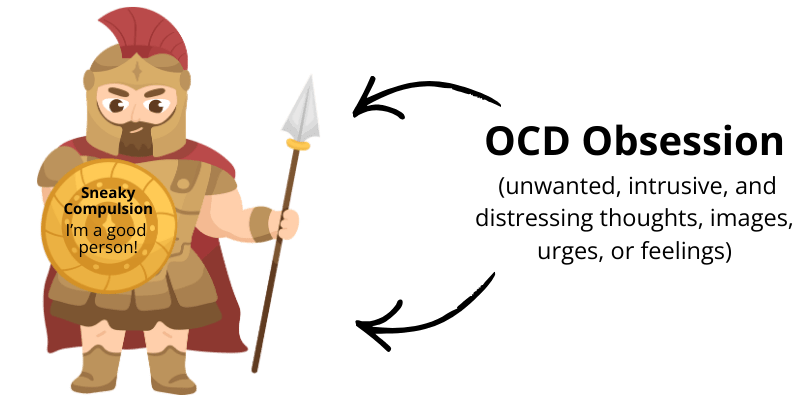
Bringing us round to OCD we can see how this system can work against us. When we’re overly focused on our obsessions (unwanted, intrusive, and distressing thoughts, images, urges, or feelings that repeatedly enter a person’s mind and cause significant anxiety.) our brain is going to see them as important and hijack that small stream of data coming through to our conscious awareness to bring our attention to them. As it does this it blocks out all the other things we might very well have been interested in!
Another great quote which I love is: ‘What am I missing by choosing to worry and be afraid?’
How much of your life are you missing out on? It can feel tough to hear all this, particularly, if like me, you’ve had OCD for a long time. OCD thoughts consume so much of our mental space and energy that when other things come along, they could be right in front of us and we don’t see them!
So what do we need to do?
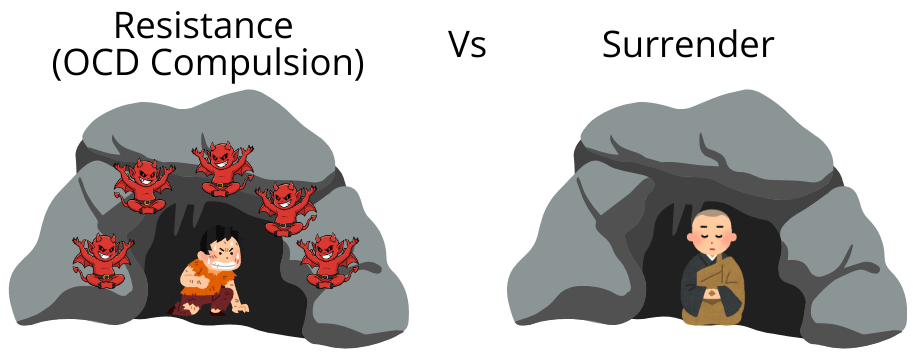
Well it doesn’t happen quickly, but we need to not engage with the OCD obsessions when they come in, any resistance to them shows the brain they are important and activates that filter. I know it can feel impossible, but I have found, through 30 years of OCD experience, it is the only way to be rid of them. Just say:
‘Thank you brain, that’s exactly what I want to hear right now’
and carry on with your day. This way you’re not pushing it away but you’re also not interacting with it.
Next, you need to check your inner dialogue. This will also effect what comes through your filter and quite often is running on auto pilot in an unhelpful way.
A great exercise is to sit for a moment and see how you talk to yourself. I’m guessing if you have OCD you’re probably not being that kind.
From Jim Kiwk’s book, a quote from Dr Jennice Vilhauer
‘The inner critic isn’t harmless. It inhibits you, limits you, and stops you from pursuing the life you truly want to live. It robs you of peace of mind and emotional well-being and, if left unchecked long enough, it can even lead to serious mental health problems like depression and anxiety’
and I’d venture to add OCD to that list.
Take a moment and write down what you hear yourself saying, then see if you can find a better more uplifting dialogue to tune into. Below are a couple of ideas for when OCD obsessions come in but you can apply this idea to all aspects of your life:
- ‘I’m noticing my OCD is feeling overwhelming right now, but I’m working on letting it be and I know it will pass. I am a strong and resilient person who can sit with this uncomfortable feeling’
- ‘I know that giving into the OCD obsession will only make it worse in the future, I’m being strong now for my future freedom, I’m so proud of myself’
- ‘When my OCD is triggered, I know I will be thrown into fight or flight, I can’t think rationally in that state so there is no point in interacting with the thought, I love that I can empower myself with this knowledge’.
Next time you’re triggered have a go at using one of the above and see if it helps switch your mind away from negative thinking – which is going to be the focus of next week’s post.
Don’t forget to subscribe if you haven’t already so you don’t miss any of my upcoming posts. let me know your thoughts on the RAS in the comments below, I’d love to hear your experiences of it too.
I hope this insight has been helpful, As always, Stay Strong xxx













 Conquering OCD