5 Simple Words to Help Manage Intrusive Thoughts Effectively

‘I’m not answering that question’, 5 simple words and yet it can feel so hard in the moment. 

When you’re spiralling – for whatever reason – you can feel quite desperate and like you must focus all your attention on answering OCD/anxieties questions, because ‘this time it might matter’, ‘I can’t take that risk’ or ‘I need to check, just in case’!

Does all this sound familiar? 

I get this a lot, in fact most days.  Sometimes something will happen or sometimes it can literally be an uncomfortable thought, feeling or emotion and that’s it my brain will hyper-focus on trying to work out the answer/solution as if it’s life or death! 

Sitting with the doubt can feel like too much, when it’s the people you love, your own mortality or something that strongly conflicts with your values.  You feel like the risk is too high and you must know the answer right now! 

Well let me tell you something, this is OCD and anxieties favourite game.  It wants to steal your focus, it wants your time and energy and nothing but your full attention is acceptable.  It likes to throw things at you until something sticks and then, aha, it’s got you, say goodbye to the rest of your day! 

So, how can we know if it’s OCD and anxiety or whether we genuinely need to pay attention to a thought, I hear you ask?

Ultimately the game is to learn to sit with the uncertainty but I’ve found a good guidepost is to ask yourself the following two questions:

  1. Am I suffering? 
  2. Do I feel desperate and like I need the answer right now?

If you’ve answered yes to either of these questions, then in my experience you can pretty much guarantee that you are in an anxiety/OCD spiral and that you wont be thinking logically/rationally. 

Your job is therefore to do NOTHING!

Step away from the thought and carry on with your day as if it’s completely irrelevant.  You can expect to feel anxious but that’s OK. 

Every time that thought comes back into your head just say the 5 words:

‘I’m not answering that question.’

and carry on with whatever you’re doing.

I do understand that in the moment when your brain is telling you that thought needs all your attention it can feel impossible, but you need to be brave and let it be. 

Another time this is particularly helpful is at night, when our rational brain is having a rest and we’re never thinking at our best. Things ALWAYS seem worse in the middle of the night so just tell your brain, I’m not answering that question’.

I really hope it helps you as much as it has me,
Let me know how you get on and as always,
Stay Strong xxx

OCD – How to know if you should pay attention & why we don’t trust ourselves.

I wrote last week about trust being maybe the most important thing in OCD and Anxiety recovery.  I’ve been using this concept over the last week in my OCD work and there really does seem to be something in it. 

Ultimately OCD thrives on doubt, and that doubt is in yourself and your ability to cope with whatever situation life/your brain throws at you.  It’s our inability to trust that when placed in a situation, we’ll take the right action/make the right decision/act in accordance with our values/be able to cope with the whatever’s thrown our way.

So why don’t we trust ourselves?  Who or what has made us doubt our own mind & judgement?

We’re generally told not to go looking for reasons we have OCD in therapy and the current belief – or so I understand – is that it is potentially a mix of genetics & life experiences but as far as I know there are no certainties here.    

Ultimately, we don’t need to know why we have it to recover from it, but it is my belief that OCD is often triggered when we’re in periods of heightened emotional stress.   Potentially trauma but also new mums, big life changes, times when our parasympathetic nervous system – fight or flight – is more active for whatever reason. 

When in this mindset (fight or flight) we think less rationally (trust ourselves less), our emotional brain is more active and so the thoughts that come up could potentially be stickier/more triggering to us. 

I know when my OCD/anxiety has been triggered, for whatever reason, I am then more vulnerable to other OCD thoughts/triggers – a reason ERP can be so hard.  When I’m back in my sympathetic nervous system – rest and digest – often I can dismiss THE SAME THOUGHTS easily (I trust myself). 

Another example of this is at night when the rational side of the brain (prefrontal cortex) winds down for a rest and the emotional side of the brain takes control.  Ever thought something in the middle of the night and freaked yourself out, not been able to get back to sleep and then in the morning thought, what the…….???? Yep, that’s what OCD feels like.  The logical part of the brain seems to switch off and you’re in fight or flight, thinking in black and white, able to convince yourself that up is down and potentially you could secretly be a psychopath/murderer/paedophile/whatever your current theme may be. 

This emotional part of the brain is powerful – imagine it like an elephant and the logical thinking part like the rider.  The rider cannot control the elephant; it must work with it otherwise it will take control.

We regain our trust and switch the logical brain back on by sitting with the thoughts and doing, well, nothing.  This, when you’re in fight or flight is terrifying, almost impossible at times.  Your brain is desperate to work it out, it feels like it needs to know NOW!  But that need and desperation is your sign that you are spiralling, and you actually need to do nothing

I read Martha Becks new book, Beyond Anxiety, recently – some great bits in there for anyone who like to read – and she used the phrase,

 ‘If you’re struggling, then you’re spiralling’

which I really liked, because it’s not always easy to detect whether it’s your OCD/anxiety calling the shots or whether it’s actually something you should be paying attention to. In fact your brain will be telling you it’s the only thing you should be focusing right now. But if you’re suffering/struggling/distressed you can trust that you’re not being rational, and it IS your anxious OCD brain catastrophising. 

Once the logical brain switches back on, you’ll easily be able to rationalise the thoughts – I promise. 

I also know that when OCD is bad, the amount of time you spend out of fight or flight is low.  I can remember when I had my nervous breakdown, I thought my brain was never going to go quiet – ever.  And then one day I noticed I had a few seconds when it was and I thought, YES, it is possible, but it takes time, I’m not going to lie, it’s tough.  So know that if your OCD is currently bad, you may not be thinking rationally much of the time!   

You might not think this right now, so I’m going to tell you. You are a good person, you are worth it, and there is light at the end of that tunnel, so never give up. 

Stay strong – you are not alone xxx

Two things you need to cultivate to succeed in OCD recovery.

Having had OCD for 30 years now I have a lot of experience with dealing with intrusive thoughts.  What are the two main things I’ve learnt you need to cultivate to succeed in OCD recovery?

Firstly, Trust in yourself & secondly, confidence in the process

First let’s take TRUST.  OCD after all is the doubt disorder and generally most of our distress comes from doubting ourselves and our ability to cope.  We must learn to trust ourselves completely and in the choices we make. 

This is by no means an easy task, OCD can make you feel like you don’t know yourself anymore, it can make you think up is down, left is right, and black is white. 
Over time you can lose complete confidence in yourself, asking others for their options and trusting what they think over your own.  A sad and possibly quite scary situation if you choose to trust the wrong person. Do you ask for reassurance a lot from a loved one?

So how do we learn to trust in ourselves? 

Firstly, work out your values – Examples of values include; honesty, kindness, loyalty, compassion, courage, creativity, responsibility, respectful, authenticity, and dependability. The list is endless and very personal. If you haven’t done this yet then take a few minutes now and work out who you want to present yourself to the world as.  Ask yourself, who do you want to show up as day to day? 

(Still not sure where to start with your values?  Then google ‘core values quiz’ and you’ll get multiple options to guide you.)

Quite often when we feel uncomfortable it’s because of something called cognitive dissonance; this is when our actions/thoughts don’t align with our values.  You can however think of that uncomfortable feeling as a good thing, it’s OCD misaligning with who you believe you are as a person.  It’s a sign that it’s OCD is playing its evil game and has nothing to do with who you are as a person. 

Secondly, work out your reason – when times get tough in OCD recovery – and they will – you’ll need to dig deep and the way to do this is to find your reason for recovery.  Write it down, know it inside out and when it’s hard think of that person, reason or version of yourself, which makes the effort it worth.

Thirdly, action – the brain believes what it sees, we must step forward no matter how hard it feels.  Some days it may feel impossible – I know I’ve been there – but the only way to build trust is to be your own advocate and align with your values. 

Moving onto confidence, confidence in ourselves but also in the ERP process. 

ERP (Exposure response prevention) therapy is hard, it involves working out what you’re scared of/avoiding and slowly allowing yourself to exposure yourself to it. It goes against everything your brain is telling you to do and feels horribly uncomfortable but until the brain sees that it can cope in the situation – whatever it may be – it will be scared and doubt (mistrust) your ability to cope.

The hardest part of this process is creating the trust and confidence.  If OCD has done it’s job well, you may be starting at zero on the trust scale.  How can you trust something with no evidence?  That’s what the brains telling you right?  Sure, the nice therapist is telling you it works but the brain only believes what it sees.

Somehow you have to step off the shore into the lake and realise its not as deep as you thought.  I admit it can feel like jumping out of an aeroplane with a parachute attached to your back not knowing if it’s been packed properly.  This is, I believe, why you either have to get to absolute rock bottom before you truly start on that road to recovery or your reason has to be bigger than you, to make the risk of jumping into the unknown worth it.

Of course, once you start on the process you start to build evidence quickly that it works, every time it’s easier to jump, so to speak, but it does take time and energy.  I love the analogy of OCD recovery being like a set of fairy lights.  It’s not all or nothing like a flashlight, it’s slow and gradual, they come on one at a time as the brain learns to trust in the process. 

We must make ERP a lifestyle choice, constantly building up that catalogue of evidence as proof to the brain that we are capable and can trust ourselves when the intrusive thoughts come along.  It is only once you have tried and see the desired outcome that your brain will learn that it can sit with the doubt & uncertainty. 

So, ask yourself, do you trust myself? 

I’d love to hear about some of the times you pushed outside of your comfort zones even though it was hard. If this resonates with you please share your experience below.

As always,
Stay Strong xxx 

Does giving into just ONE OCD compulsion matter?

Mental health is like a garden; I love this analogy. 
I have found over the years that I go through peaks and troughs with my mental health, and it is quite often the case that a trough will occur when I’ve become a bit lazy with my ‘gardening’ so to speak.

The ‘weeds’ don’t pop up all at once of course, it’s quite insidious in that respect, but over time they sneak in.  Maybe you let one compulsion go or you avoid a situation which might be a bit uncomfortable – because after all one little slip can’t hurt right?    

Well here’s the bad news, it can!

Know the brain believes what it sees, it notes down what you do and it’s watching ALL THE TIME!  One missed exposure is not just one missed exposure, it’s evidence to your brain that you can’t cope with the situation at hand and so you should do the compulsion, avoid the situation if possible and in the future too – just in case.  You can see how this can lead to a spiral effect and how those weeds can take hold. 

It can very quickly become a slippery slope and before you know it, you’re snowballing, your obsessions (intrusive thoughts) worsen, the brains monitoring systems ramps up, along with your anxiety.  You feel more on edge & you start to loose trust in your own judgement.

‘Last time we did the compulsion and it worked out OK, best do the compulsion again – just in case’.

But if you never give the brain the opportunity to see that you can cope, then how will it ever know?   

It’s tough living with OCD and anxiety.  Every day can feel overwhelming and it’s hard to be constantly putting yourself out there and sitting with uncomfortable feelings, which let’s be honest are designed by nature to try and stop you doing the uncomfortable thing!  We are literally going against our built in mechanisms to stop us doing the scary thing and so it is hard and it’s tiring but it is worth it. 

When you get to drive to the shops without worrying about having hit someone on the way, when you can leave the house without having to check the doors multiple times, when you can use public toilets without fear of contamination, when you can hug your child and not worry about doing something inappropriate, when you can cook the tea without fretting you’ll lose control and stab someone, the list is endless.
Maybe some of these resonate with you or maybe you have some other, obsessions (intrusive thoughts), anxieties or fears that hound you daily.  Whatever they are, know they are not bigger than you, you can overcome the ‘weeds’ and thrive, but you must live the ERP (Exposure, response, prevention) lifestyle. 

It sounds so easy right, ‘just sit with the feelings’, I get it, it’s hard, it’s overwhelming at times, but it is worth it.  When you get a moment and your mind is quiet – yes it can happen – when your body feels more relaxed because it’s not in fight or flight all the time, when you can connect with friends and family because you’re not distracted and irritable, it’s worth it.  It’s freedom, it’s the best feeling.

So, how do we keep the weeds at bay?
Well some of it comes down to keeping what I like to call ‘The 5 foundations’ in check

Ask yourself now, do I…

  • …Sleep enough?
  • …Eat well? 
  • …Move my body everyday? 
  • …Have good relationships?
  • …Allow myself to relax?     

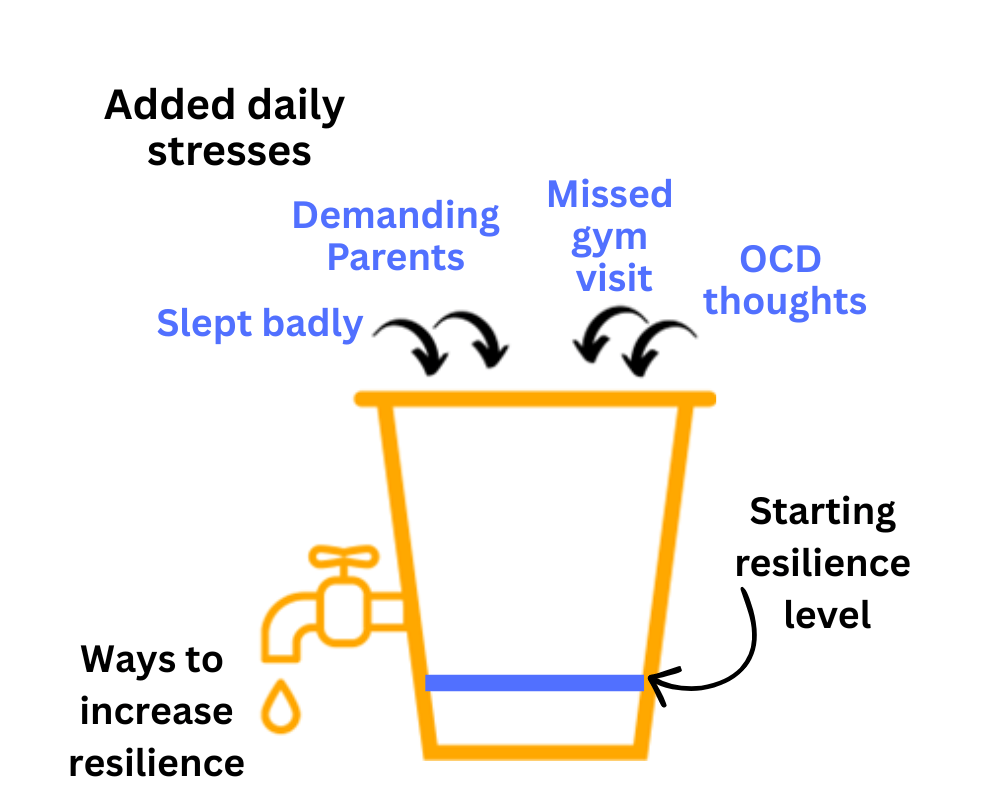
All of the above will help build your resilience up so that when you come to your exposures you are in the greatest mental space to deal with them.  We need to give ourselves the best chance to sit with the feelings that come up and the 5 foundations will do this for you – know that when they slip you will be more vulnerable to OCD thoughts and ERP (exposure response prevention) will be more difficult.

Making ERP a lifestyle, is important. We should be pushing outside of our comfort zones, just a little bit, each day proving to our brains that we are strong, resilient and that the thoughts are irrelevant.

Know that you are not alone, recovery is slow but not impossible and definitely worth it.
As always,
Stay Strong xxx

OCD – 4 things that are helping right now

I’m sad to see that It’s been just over a year to the day that I’ve written a full post.  I have been updating social media a bit and in all honestly I was considering letting this blog go, but I’ve just read some of the comments and I’ve realised that that’s not an option so I’m back!    

I started conquering OCD in 2017 when my mental health was in a pretty good state.  I felt strong and as though my OCD had pretty much gone – if only I had known what was coming my way!  I have been on a rough ride the last two years after a series of events ‘took me down’, so to speak.  I jest and I can start to laugh about it now but I really have been to hell and back. 

The upside of my ‘journey’, man I hate that word, is that I have learnt LOADS and so now I am able to share all this knowledge with you guys. 

To get us started again here are four things that are helping me right now: 

Exercise – I practice yoga daily as I teach – I realise this sounds a bit ‘perfect’ and I want to make it clear that I am very far from that. Sometimes a daily practice is just 5 minutes on the mat but showing up every day no matter what, tells my brain that I can do hard things.   I also love box fit classes, this gives me the cardio I need but can also be quite triggering for my OCD.  I quite often have to deal with intrusive thoughts of ‘what if I hit the person in front of me by mistake’ or if the face of someone I love pops into my head during a boxing sequence, OCD really is the gift that keeps giving. 

I know for a lot of people it’s hard to fit the exercise in but it doesn’t have to be big workouts at the gym.  It can be walking the dog or just taking the stairs instead of the lift.  I’ve heard it said that exercise can be as effective as SSRI’s for mental health so it’s got to be worth a try right?    

Reducing caffeine – This ones so super tough!  The brain likes patterns and routine and so most of us nowadays are addicted to tea or coffee, or whatever hot beverage you enjoy.  This is why I’ve put reducing rather than eliminating.  If we tell the brain, you can’t have something, it’s going to get mad at you but if we just try and substitute that third cup of coffee for a hot water you might be surprised how easy it is.  Most of the time I find that the brain just likes the habit of making the drink and the feeling of sipping something warm and comforting rather than the coffee itself.  Hot water will tick all of those boxes, so why not give it a try?  Also try not to drink caffeine too late in the day, it’ll mess with your sleep, which if you have OCD I’m guessing isn’t great already.   

No TV at bedtime – You didn’t think it was going to be easy did you?  This has been so hard to implement for me.  I used the TV as a massive crutch for literally years to get myself to sleep but ultimately all it was doing was disturbing it.  The result of stopping the TV has been that I’ve slept deeper and better.  I then have more energy in the mornings and I’m more resilient when the OCD thoughts come.  I find focusing on my breathing helps get me to sleep and is enough of a focus for my mind, it’s as simple as breathing in for 3 breaths and out for 6 breaths.  Another option is to think of something kind you can do for someone else the next day.  This takes your mind away from you and your OCD intrusive thoughts and puts it on someone else and in a positive way, hello happy hormones – which by the way help to get rid of the stress hormones, yay.          

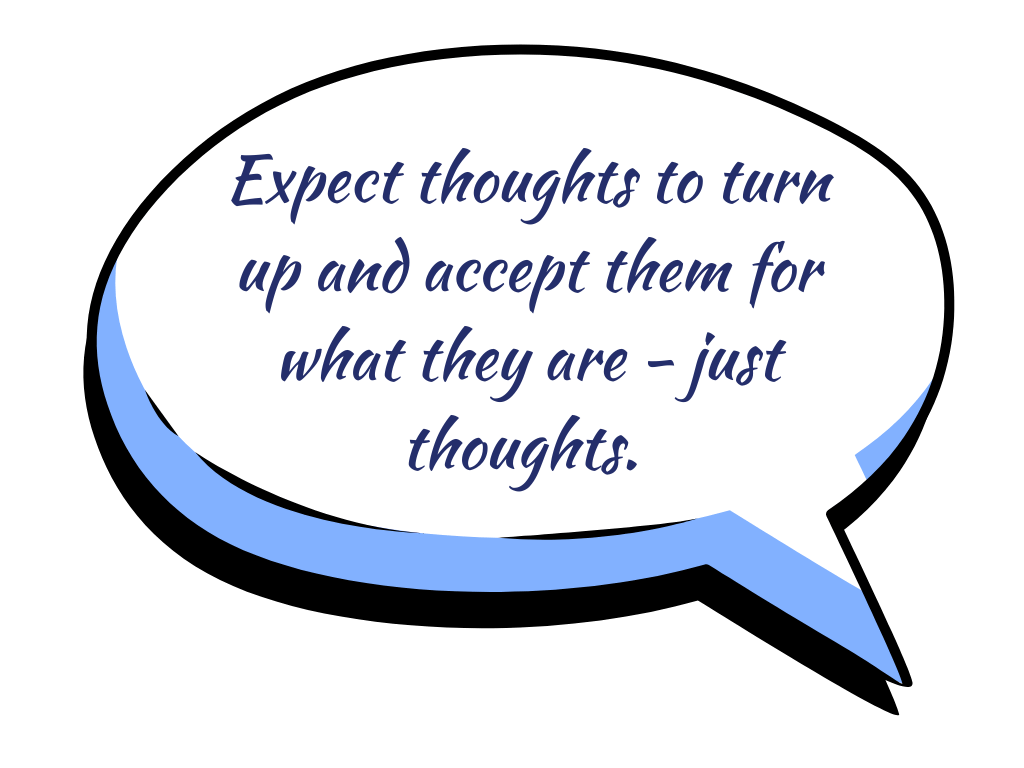
Learning to sit with uncertainty – Again stupidly hard I know.  When things feel real you just want to work out the truth but ultimately your memories are made up of your memories so you’re not going to find the answers when you ruminate.  To add to this when we feel worried about a situation we will only focus on the negative or ‘evidence’ in the memory and so it becomes distorted.  ‘Overthinking only leads to unhappiness’, do your best to let the thoughts be. 

So those are some little nuggets I’ve been working with recently.  Unfortunately, there are no quick fixes when it comes to OCD.  We have to be proactive in our recovery. 

I hope you’re all doing well out there, remember you’re not alone!

Stay strong xxx